



Blog
Surgical Power Tool Repair: Handpiece, Motor, Cable, and Seal Fault Triage


A surgical power tool rarely fails at the moment it stops. It fails over a series of autoclave cycles, each one pushing steam past a hardening seal and into a motor that was never designed to be wet. By the time a handpiece arrives at a repair bench with “no power” or “stalls under load”, the failed component is usually the last link in a chain that includes the battery or console, the cable, the seal stack, the bearings and the chuck. Repair time is decided almost entirely by how quickly that chain is narrowed down.
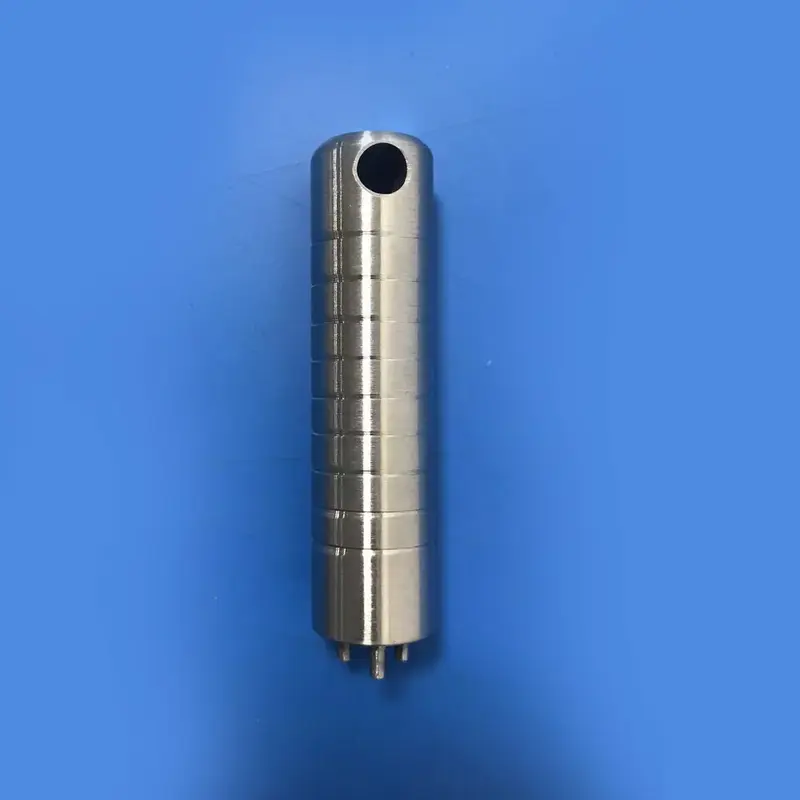
This article sets out a triage sequence for electric and battery-powered handpieces — drills, saws, reamers, shavers and microdebriders — that keeps the customer’s console and attachments out of the diagnosis until they have been eliminated. It is written for independent repair companies and hospital BMETs who already service these systems and want a repeatable method, a parts list that matches the failure pattern, and acceptance records that survive an audit.
The system, and where it breaks
A powered surgical system is a chain of five assemblies: the control console or battery, the cable or handpiece cord, the handpiece body with its motor, the gearbox and chuck that transmit torque, and the attachment (blade, burr, drill bit, saw blade). Pneumatic systems replace the motor and cable with a hose, turbine or vane motor, but the failure logic is similar.
Two conditions dominate the wear pattern. The first is steam sterilization: every cycle exposes seals, lubricant and windings to heat and moisture, and a seal that has taken a set will admit a small amount of condensate on each cycle. The second is mechanical load: bearings and chucks run at high speed under axial and radial load, and any run-out accelerates wear in both.
Contamination follows the same route. A study of cannulated orthopaedic drill bits found that retained biological debris inside the cannulation was not reliably sterilized by standard autoclave cycles: after inoculation with Bacillus cereus, Pseudomonas aeruginosa and MRSA, B. cereus was recovered from one drill bit in the 180-minute exposure group after sterilization, and the authors concluded that retained biodebris in cannulated drills may not be sterile, with delayed reprocessing increasing the risk (Smith et al., Am J Infect Control 2018). For a repair technician, the practical consequence is that internal channels and cannulations have to be inspected and cleaned as part of the repair, not only the exterior housing.
Why the processing instructions belong in the diagnosis
Repair decisions depend on the sterilization cycle the device actually sees. ISO 17664-1:2021 sets out what a manufacturer must tell the user about processing — point-of-use treatment, cleaning, disinfection, drying, inspection and maintenance, packaging, sterilization, storage and transport — for critical and semi-critical devices. When a handpiece is returned repeatedly for the same seal failure, the first question is whether the facility is following the validated cycle in that information, including dry time and cooling, rather than whether the last seal was defective.
The scale of the problem justifies the attention. In a prospective study of 139 cardiac surgery patients over twelve months, 92% of cases had at least one equipment problem, 80% involved small surgical instruments, and four cases (2.8%) were cancelled because of equipment issues; the authors recommended mandatory annual inspection of instruments with a traceable maintenance log (Efthymiou and Cale, Ann R Coll Surg Engl 2022). Power tools sit on the same bench and deserve the same documentation discipline.
Step 1: isolate console, cable, handpiece and attachment
Every diagnosis starts with known-good substitution, in a fixed order, so that the result means something. The table below is the sequence used on the bench: run it top to bottom and stop at the first stage where the fault disappears or the measurement goes out of range.
| Reported symptom | First test | If normal, next | Component implicated when the test fails |
|---|---|---|---|
| No start, no display, intermittent start | Known-good battery or console; check pack voltage under load | Cable continuity and connector pins | Battery pack, console, cable, trigger switch |
| Weak power, stalls under load | Run unloaded, then with the attachment fitted | Motor no-load current and speed against the service manual value | Motor, bearings, gearbox, worn attachment |
| Overheating, burning smell | Short run at low speed; feel housing temperature rise | Insulation resistance of windings; inspect brushes or vanes | Motor winding, brushes, bearings, lubricant loss |
| Noisy, vibrating, rough rotation | Run without attachment; listen and feel for bearing growl | Spindle run-out and chuck concentricity | Bearings, bent spindle, chuck jaws |
| Speed fluctuates, trigger response erratic | Check trigger variable-speed output on the bench | Cable and connector continuity under flex | Trigger/switch module, cable, hall sensor |
| Attachment will not lock or releases under load | Inspect chuck jaws and locking collar | Try a known-good attachment | Chuck, locking mechanism, attachment hub |
| Runs, then stops after sterilization | Test immediately after one autoclave cycle | Inspect seals and internal moisture | Seal stack, O-rings, housing gaskets |
Two measurements do most of the work. No-load current against the service-manual value separates a tired motor from a mechanical drag; a motor drawing well above specification with the attachment removed is usually binding on its bearings or loaded by a dry gearbox. Insulation resistance separates an electrical fault from a mechanical one, and it is the check that finds a winding damaged by condensate before the tool fails in a case.
Step 2: treat the seal stack as the primary wear item
In handpieces that are steam sterilized, seals are the component most likely to end a repair cycle early. The mechanism is straightforward: elastomer seals take a compression set at autoclave temperature, lose elasticity over cycles, and then admit a small amount of condensate during the vacuum and pressure phases. The moisture reaches the motor, the bearings and the switch, and the failure presents as an electrical fault several cycles later.
Material choice is not interchangeable. Fluorocarbon (FKM) seals are the usual choice for steam-exposed handpieces because they retain properties at autoclave temperatures better than silicone, which swells and softens with repeated exposure. The lubricant has to match: a grease that washes out or carbonises leaves the gearbox dry, and a dry gearbox raises motor current and heat. Where the OEM specifies a particular seal compound and lubricant, that specification is the only defensible choice for a repair that will be warranted.
| Component | Typical failure mode | Replacement practice | Verification after assembly |
|---|---|---|---|
| Housing and shaft seals | Compression set, nicks from assembly, condensate ingress | Replace as a set; never reuse a seal that has been through cycles | Immersion or pressure check per OEM method, then one autoclave cycle and retest |
| O-rings and gaskets | Flattening, cuts, chemical swelling | Correct compound and hardness; light compatible lubricant only | Visual and functional check; no moisture in the housing after a cycle |
| Bearings | Noise, play, grease loss, corrosion pitting | Matched pair replacement where the spindle runs in two bearings | Run-out and vibration check; no-load current within specification |
| Motor brushes / vanes | Wear to limit, arcing, reduced torque | Replace per OEM kit; bed in before load testing | No-load speed and current; torque check under load |
| Chuck and locking collar | Worn jaws, sticky release, failure to lock | Replace chuck assembly; check attachment hub for wear | Lock and release with a known-good attachment; run-out check |
| Cable and connector | Broken strands at the strain relief, corroded pins, intermittent contact | Replace cable; do not splice at the handpiece end | Continuity under flex; speed stable through the full trigger range |
Step 3: battery packs, cables and the parts people skip
Battery packs cause more “failed handpiece” returns than any other single component. Cells age, capacity falls, and a pack that shows a full charge on the console can collapse under the current draw of a loaded burr. Test under load, not open-circuit: a pack that holds voltage with no load and sags under load is finished regardless of what the indicator says.
Rebuilding packs is a decision, not a default. Cell replacement requires matching chemistry, capacity and protection circuitry, and the pack housing has to survive sterilization. Where the OEM offers a pack, the warranty and traceability argument usually outweighs the saving from a rebuild, particularly for hospital customers who need a documented service history. Where rebuilding is offered, the work order should state the cells used, the capacity test result and the cycle count.
Cables fail at the two points nobody inspects until they fail: the strain relief at the handpiece and the connector pins at the console. A cable that passes a static continuity test can still drop out when the surgeon flexes it mid-case. Flex the cable through its full range while monitoring continuity, and look for green corrosion on pins that have been through repeated steam cycles. Corroded pins raise resistance, the motor loses speed under load, and the fault is reported as a weak handpiece.
Step 4: acceptance testing and return to service
Acceptance is where a repair becomes defensible. The minimum record for a power tool repair is: as-found complaint, as-found measurements, components replaced with part numbers, as-left measurements against the OEM specification, one sterilization cycle completed after assembly, and a post-cycle functional retest. Functional retest means the tool starts, reaches the specified no-load speed, holds speed under load, does not overheat in a short run, and locks and releases its attachment correctly.
Report failures through the same channels the hospital uses. Device failures and near-misses involving powered instruments belong in the facility’s incident system, and adverse events are reportable to the FDA through MedWatch and searchable in the MAUDE database. A repair company that can point to a documented failure trend — for example, repeated seal failures on one model at one facility — has a stronger case for changing that facility’s processing practice than one that simply invoices the repair again.
Quality management of the repair process itself follows the same logic as device manufacturing. ISO 13485:2016 is the reference most hospital procurement teams recognise for a repair organisation’s quality system, covering traceability, records, competence and corrective action. Even where certification is not held, structuring work orders around those requirements makes audits and tender submissions considerably easier.
Step 5: what to stock, and when to condemn
Stocking follows failure frequency, not catalogue breadth. For most benches, the parts that earn shelf space are seal kits, bearings, motor brushes or vanes, chuck assemblies, cables and one or two common battery packs per console family. Motors and gearboxes are worth holding only where the same model appears repeatedly, because a motor that sits for a year is capital tied up in a shelf.
| Part group | Why it is stocked | What to record at goods-in | Typical use in a repair |
|---|---|---|---|
| Seal kits and O-ring sets | Replaced on every overhaul; cheap relative to a return | Compound, hardness, batch, model compatibility | Full reseal after any housing opening |
| Bearings | Wear item on every high-speed spindle | Bearing number, tolerance class, supplier batch | Spindle and motor rebuilds |
| Motor brushes and vane sets | Determines whether a motor is rebuilt or replaced | Kit number, motor model range | Brush replacement, pneumatic vane service |
| Chuck assemblies | Common failure that stops a case immediately | Chuck type, attachment interface | Locking failures, run-out correction |
| Cables and connectors | High-turnover item, easy to fit | Length, connector type, console compatibility | Intermittent power, speed faults |
| Battery packs | Most frequent cause of “dead” handpieces | Chemistry, capacity, manufacture date | Capacity failure, refusal to charge |
Condemning a tool is a commercial decision with a technical floor. A cracked housing, a bent spindle that cannot be straightened within run-out tolerance, a motor with a shorted winding, or a chuck interface worn beyond the point where a new attachment will lock reliably are all cases where repair cost approaches replacement value and the safety margin is gone. Document the reason, return the tool, and give the customer the replacement options rather than a repair that will fail again.
Building the bench around the work
Power tool repair needs less bench space than endoscope work but more electrical measurement: a programmable supply, a current clamp or inline meter, an insulation tester, a tachometer, a torque checker and a set of known-good batteries and cables for each console family. The torque and measurement tools are the same ones used for endoscope work, and the calibration discipline is identical — see the bench setup checklist for the calibration intervals that apply to torque drivers and test equipment.
Compatible motors, cables, chucks and switch modules for Stryker, ConMed Linvatec, Medtronic and similar systems are listed in the dynamical system parts range, and the fixtures and hand tools used to open and reseat these housings are in the repair tools range. Repair companies that also handle hospital overflow work will find representative power tool jobs documented in the repair case library.
Questions that decide the quote
Should a handpiece always be resealed when it is opened?
Yes, where the tool is steam sterilized and the housing has been opened. A seal that has been compressed and released will not reseat reliably, and a leak that appears after the repair is indistinguishable from a repair fault. The cost of a seal kit is small against the cost of a returned handpiece and the loss of the customer’s confidence.
Is a motor replacement cheaper than a rebuild?
It depends on the failure. Brushes, vanes and bearings are rebuild items with predictable cost. A shorted winding, a scored commutator or a cracked magnet housing usually points to replacement. Compare the rebuilt unit’s measured performance against specification rather than the parts price alone: a rebuild that cannot reach the specified no-load speed will come back.
How often should a power tool be serviced?
There is no single interval that holds across models and caseloads. The defensible approach is to set the interval from the facility’s own data — cycles between failures, seal condition at inspection, and the number of tools in the fleet — and to record the decision. Annual inspection with a documented maintenance log is the minimum recommended in the surgical equipment literature cited above; high-use handpieces in busy arthroscopy or trauma programmes usually need shorter intervals.
What the work order should contain
A power tool repair that stands up to scrutiny records five things: the complaint in the customer’s words, the as-found measurements, the components replaced with part numbers and batch where available, the as-left measurements against the OEM specification, and the post-sterilization retest result. That record is what allows a repair company to distinguish a genuine wear failure from a processing problem, to quote the next repair accurately, and to show a hospital procurement team that the work is controlled. For part matching, send the model number, console family and the as-found measurements through the contact form; for technicians new to powered instruments, the teardown and reassembly sequences are covered in the repair training programme.