


Blog
Flexible Endoscope Air/Water and Suction Valve Failures: Diagnosis, Part Matching, and Acceptance Checks

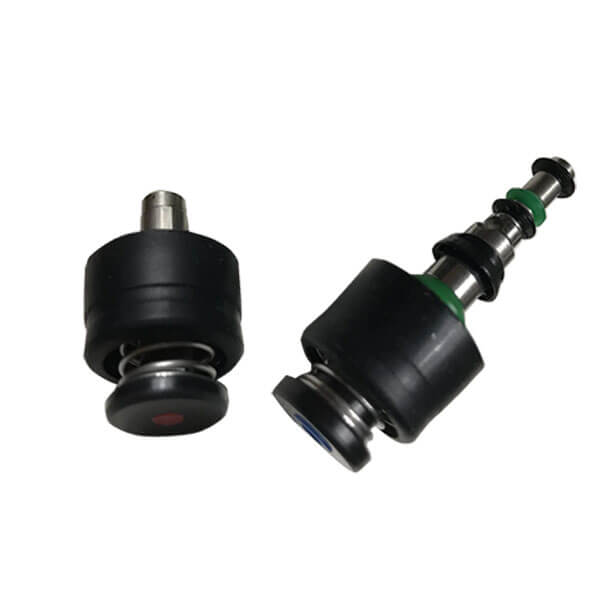
A weak water jet, a lens that stays fogged, or suction that will not hold are three of the most common reasons a flexible endoscope comes back to the bench. In a large share of those cases the scope channels are sound. The fault sits in the air/water valve or the suction valve, a small removable assembly that is handled, brushed, soaked, and reprocessed after every procedure. Fitting the correct replacement valve set fixes the symptom in minutes; rebuilding an insertion tube or a working channel because the valve was never tested wastes far more time and money. This guide sets out what these valves control, how to separate a valve fault from a channel, pump, or bottle fault, what the published evidence says about reusable valves, and how to specify, match, and acceptance-check replacement valve sets for Olympus, Pentax, and Fujinon scopes.

What the air/water and suction valves actually control
On a conventional gastrointestinal endoscope the control body carries two removable valves. The air/water valve sits over a port fed by the insufflation pump and the water bottle; pressing the button closes the air vent and sends air into the channel, while depressing it further opens a water path to the nozzle at the distal tip that washes the objective lens. The suction valve sits over the working channel port; pressing it connects the channel to the vacuum line so that fluid and insufflation gas can be evacuated. Both are spring-loaded piston assemblies with one or more O-rings, a return spring, and a seating face that seals against the valve cylinder in the control body.
That sealing interface is where most field failures start. A worn O-ring, a fatigued spring, a scored piston, or debris in the valve cylinder produces exactly the same symptoms as a blocked channel or a failing pump: weak air, weak water, poor suction, or a button that sticks. Because the valve is designed to be removed for cleaning, it is also the component most exposed to reprocessing wear. Before any internal repair is quoted, the valve should be treated as the first suspect and tested against a known-good unit.
Symptom-to-cause triage before you order parts
A short bench sequence separates the valve from the rest of the system. Start with the endoscope dry and connected to a known-good light source, pump, water bottle, and suction line. Fit a new or verified valve set, then actuate each function and observe the distal tip in a basin of water. If the fault disappears, the original valve is the cause. If it persists with two known-good valves, move downstream to the nozzle, the tubing, and the channel. The leak test procedure should be run before immersion, because a leaking valve seat and a leaking scope produce confusingly similar bubble patterns.
| Reported symptom | Valve-related cause | Non-valve cause to rule out | Quick verification |
|---|---|---|---|
| Weak or no water jet at the lens | Worn piston seal; blocked valve water port; weak return spring | Blocked distal nozzle; empty or unpressurized water bottle; kinked tubing | Fit a known-good valve; if unchanged, flush the nozzle and check bottle pressure |
| Lens stays fogged / poor insufflation | Air vent not closing; O-ring leak at the seating face | Pump output low; leaking bottle cap seal; channel obstruction | Occlude the vent manually; compare bubble output with a sealed valve |
| Suction weak or absent | Suction valve not seating; debris under the piston | Blocked working channel; vacuum line leak; full suction canister | Test suction with the valve removed and the port occluded directly |
| Button sticks or returns slowly | Fatigued or corroded spring; dried lubricant; swollen O-ring | Damaged valve cylinder in the control body | Actuate a new valve in the same cylinder; inspect the bore for scoring |
| Fluid weeping from the valve port | Perished O-ring; cracked valve body | Cracked valve cylinder; loose port fitting | Replace the O-ring first; pressure-test the cylinder separately |
| Intermittent function during a case | Valve partially clogged by reprocessing residue | Intermittent pump or vacuum supply | Disassemble and inspect the valve under magnification for residue |
The table is deliberately weighted toward cheap, reversible tests. A reusable valve that has been in service for hundreds of cycles is a consumable, not a precision component to be rebuilt indefinitely. When a known-good valve resolves the complaint, the repair is a valve set plus a note in the service record, not a channel replacement.
Why reprocessing dominates reusable valve failure
Reusable air/water and suction valves are structurally complex, multi-component devices, and the published evidence on their cleanliness is not reassuring. A 2021 multi-centre laboratory investigation by Pasquale and colleagues in Infection Prevention in Practice sampled 219 valves across 11 Italian endoscopy units. Some form of microbiological contamination was found in 29.06% of reprocessed reusable valves ready for use, against 0% in the single-use control group (P=0.007), while procedural efficacy was comparable at 97.6% for single-use and 98.8% for reusable valves (P=ns) across 1,121 recorded endoscopies. The authors note that correct manual cleaning and disinfection of a reusable valve can require more than 30 steps.
The same study found that the reprocessing method mattered as much as the valve design. Valves cleaned manually and processed in an automated endoscope reprocessor showed microorganisms in 35.58% of samples (58 of 163), whereas a combination of manual cleaning with ultrasonics, an automated reprocessor, and steam autoclaving reduced that to 5.56% (1 of 18), a difference reported as significant by Fisher’s exact test (P=0.009). For a repair shop, the practical reading is that a valve returned from a unit with an inadequate cleaning workflow is likely to arrive with residue, swollen seals, or a biofilm that no amount of bench adjustment will fix.
Damaged valves also carry a documented infection risk beyond simple soiling. A 2024 investigation by Tan and colleagues in the Journal of Hospital Infection used whole-genome sequencing to trace persistent Pseudomonas aeruginosa in gastrointestinal endoscope surveillance cultures: 22 isolates were detected, 15 (68%) were available for sequencing, and 10 of 18 pairwise comparisons were genomically linked. One endoscope remained repeatedly culture-positive despite repeated reprocessing. The review of practice found air/water valves connected to endoscopes during clinical use, and inspection of those valves revealed cracks and tears. Replacing the faulty valves and subsequently cleaning them separately with ultrasonic cleaning followed by sterilization resolved the incident.
These findings explain the standing guidance in ANSI/AAMI ST91:2021: detachable parts that are to be reused, including air/water and suction valve pistons, should be processed together with the specific endoscope as a unique set so that traceability is maintained; valves should be dried and lubricated according to the manufacturer’s written instructions for use; and caps, valves, and other detachable components should not be installed on the endoscope during storage. ISO 17664-1:2021 sets out the information a manufacturer must supply for the processing of reusable devices, which is the reference point for validating any valve cleaning workflow a repair facility adopts. For facilities in the United States, the FDA guidance on reprocessing reusable medical devices remains the baseline for labeling and validation expectations.
Reusable versus single-use: a sourcing decision, not just a clinical one
For a hospital biomedical engineering team or an independent service organisation, the choice between reusable and single-use valve sets is a procurement decision with a technical evidence base. The comparison below keeps the published numbers separate from the operational judgements a buyer still has to make locally.
| Dimension | Reusable valve set | Single-use valve set | Evidence / note |
|---|---|---|---|
| Contamination after reprocessing, ready for use | 29.06% of sampled valves showed microorganisms | 0% in the control group | Pasquale et al., 2021; 219 samples, 11 centres, P=0.007 |
| Procedural efficacy (no malfunction) | 98.8% | 97.6% | Same study, 1,121 endoscopies, P=ns |
| Manual cleaning burden | More than 30 steps can be required | None; supplied sterile | Pasquale et al., 2021 |
| Effect of cleaning method | 35.58% positive with manual + AER; 5.56% with ultrasonics + AER + autoclave | Not applicable | Same study, Fisher’s exact test P=0.009 |
| Traceability | Must be processed and stored with its named endoscope as a set | Barcoded, one procedure per unit | ANSI/AAMI ST91:2021 |
| Failure modes seen on the bench | Clogging, seal wear, spring fatigue, cracks and tears | Rare; mainly fitment errors | Tan et al., 2024; Pasquale et al., 2021 |
A repair business that supplies both categories should not present either as universally correct. Reusable sets keep per-case cost low where a validated ultrasonic and sterilization workflow exists; single-use sets remove the reprocessing variable where it does not. What matters for the parts catalogue is that the valve type, the scope family, and the reprocessing workflow are documented together, so that a repeat order is unambiguous.
Matching the replacement set to the scope
Valve sets are not cross-compatible in any useful sense. Olympus, Pentax, and Fujinon use different valve cylinder diameters, piston lengths, spring rates, and O-ring profiles, and several generations exist within a single brand’s gastroscope and colonoscope lines. A valve that fits loosely will leak; one that binds will stick; one with the wrong water port geometry will produce a weak jet even though the part looks identical on a bench photograph. Ordering by “air/water valve for Olympus” is not a specification.
A usable RFQ line for a replacement valve set records the following: endoscope manufacturer and exact model designation (for example, the GIF and CF series identifiers); whether the part is the air/water valve, the suction valve, or a matched set; reusable or single-use construction; O-ring material and count; piston and stem length; the valve cylinder diameter it must seat in; and the reprocessing method the valve is validated for. Where a valve is being replaced because of repeated clogging, note the cleaning workflow too, since the bench setup and cleaning equipment used on the returned part often explains the failure. Our flexible endoscope repair parts category is organised by scope family for exactly this reason, which also makes it the faster starting point when the model plate is still legible.
Incoming inspection and acceptance checks
A replacement valve should be verified on arrival and again after fitting. The checks below are cheap, take a few minutes, and catch the defects that generate a second service visit. They also give the receiving technician a documented basis for rejecting a batch.
| Check | Method | Acceptance criterion | Records to keep |
|---|---|---|---|
| Model and dimensional fit | Seat the valve in the intended cylinder; compare piston length against the removed part | Full insertion, no binding, no perceptible radial play | Model number, batch or lot, supplier |
| Seal condition | Visual inspection under magnification of all O-rings and the seating face | No cuts, swelling, flattening, or embedded debris | Photograph where a batch is rejected |
| Spring return | Actuate the piston 20 times by hand | Consistent, immediate return with no sticking | Pass or fail |
| Function on the scope | Connect to a verified pump, bottle, and suction line; observe the distal tip in water | Continuous air and water output; suction holds with the valve depressed | Bench test result tied to scope serial number |
| Leak integrity | Pressurize the scope and immerse per the documented procedure | No bubbles from the valve seat or port | Leak test record, pressure and duration |
| Reprocessing compatibility | Confirm the valve’s validated cleaning method against the facility workflow | IFU available and consistent with ST91 handling | IFU reference and workflow version |
Note that the leak check belongs after the valve is fitted, not before. A valve with a perished O-ring will produce bubbles at the port that can be mistaken for a scope leak, and a scope with a genuine channel perforation can appear to weep at the valve seat. Running the documented leak test in a consistent order, with the valve in place, removes that ambiguity. If a replacement valve passes every check but the symptom persists, the fault is downstream; do not keep swapping valves.
Repair or replace, and what to document
Reusable valves are worth cleaning and re-sealing only within the limits of their construction. A valve with a cracked body, a torn sealing surface, or a piston that no longer returns reliably should be removed from circulation rather than refurbished — the 2024 sequencing investigation linked cracked air/water valves directly to persistent contamination. O-rings and springs can be replaced where the manufacturer supplies them as service parts; anything that alters the sealing geometry should not be improvised.
Every valve exchange belongs in the device history record: scope serial number, valve type and lot, the reason for replacement, the bench test results, and the reprocessing workflow the set is assigned to. That record is what makes a repeat failure interpretable. If one scope returns three times with clogged valves, the problem is almost certainly in the cleaning workflow rather than in the parts, and the fix is procedural. Teams building that capability in-house can use the repair training courses to standardise bench testing and reprocessing documentation; for help matching a valve set to a specific model, the contact page is the quickest route to a part-number confirmation.
Frequently asked questions
Can a valve from one Olympus scope be used on another Olympus model?
Sometimes, but not safely by assumption. Valve cylinder geometry changed across generations, and gastroscope and colonoscope lines do not always share the same set. Confirm the exact model designation and compare the piston length and seating diameter before fitting.
Does a new valve always fix weak suction?
No. If suction is still weak with a verified valve, check the working channel for obstruction and the vacuum line, canister, and fittings for leaks before quoting an internal repair. The valve is simply the cheapest and most common cause, so it is tested first.
Should reusable valves be stored fitted to the scope?
No. ST91:2021 calls for detachable components to be removed during storage and for reusable valves to be processed and stored with their named endoscope as a set for traceability. Valves should be dried and lubricated to the manufacturer’s IFU before storage.