



Blog
Building an Endoscope Repair Training Bench: Practice Scopes, Seeded Faults, and Consumables

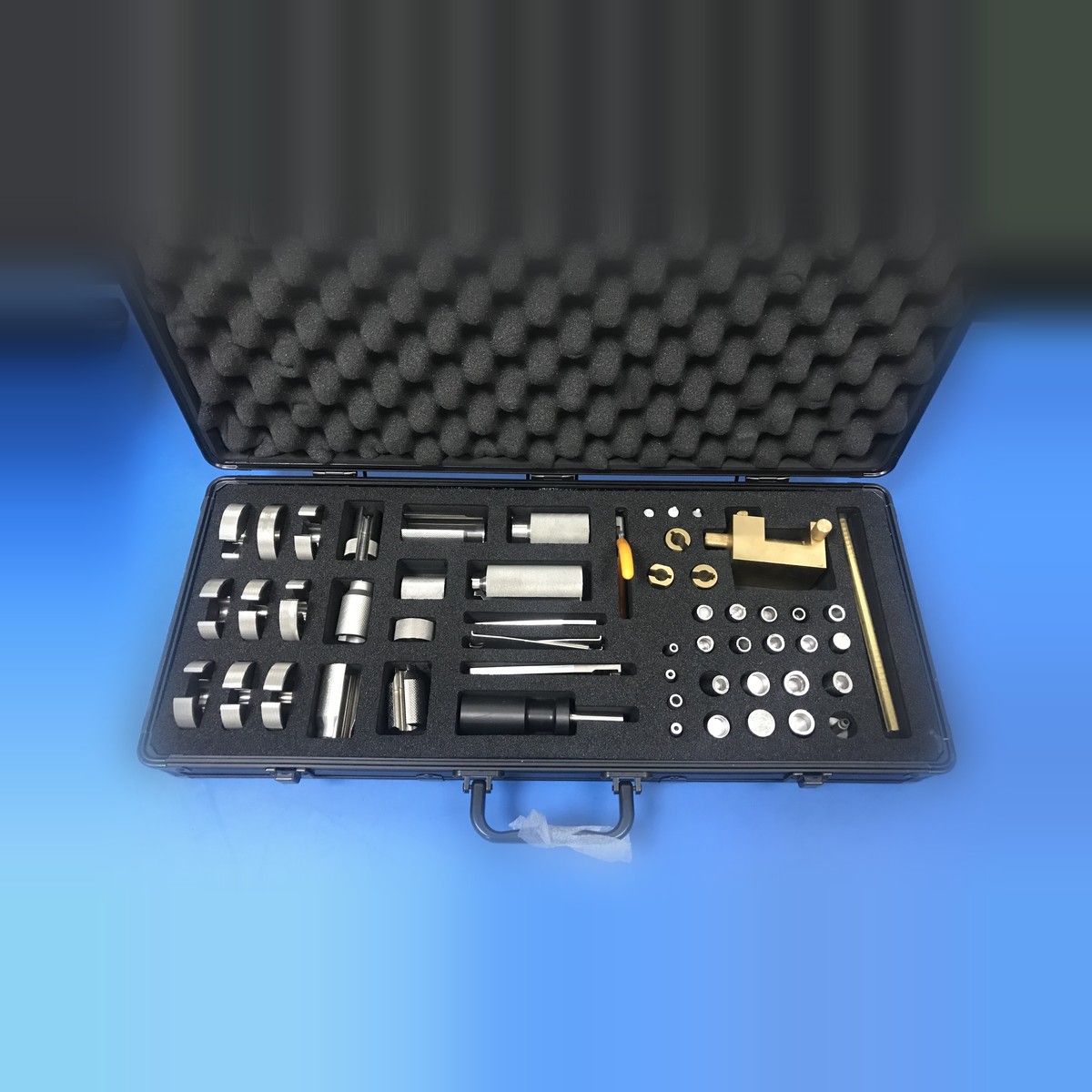

A repair course is only as good as the bench behind it. Instructors, slides and demonstrations matter, but a technician learns to service a flexible endoscope by opening one, finding a fault that was deliberately planted, fixing it with the correct part, and then proving the result with recorded tests. This article sets out how to build that bench: which practice scopes to acquire, how to seed faults that map to real failure modes, which workstations and test equipment the bench needs, how to budget the consumables that repeated practice consumes, and how to turn each exercise into objective, auditable competence evidence. It is written for BMET managers and independent service organisations that are setting up internal training, and for teams evaluating whether a training provider’s hands-on resources are adequate before enrolling.
The context is the hands-on repair training programme run at the CareUTech facility in Guangzhou or on-site at a hospital, where trainees practise on real devices in small groups across four modules: flexible endoscopes, rigid endoscopes, camera heads and ultrasound probes. A dedicated training bench is what makes that format possible, and it is a different asset from the production repair bench described in our repair bench tool checklist. A production bench is optimised for turnaround time on customer scopes; a training bench is optimised for repetition, safe failure, and measurable skill acquisition. The two overlap in tooling but diverge in almost every other decision, and conflating them is the most common mistake when a service department decides to “do some training” with whatever equipment is free that week.
What a training bench is for, and how it differs from a production bench
The clearest way to define the training bench is by its outputs. A production bench produces repaired scopes; a training bench produces technicians whose work can later be trusted on customer devices. Everything on the bench follows from that. Devices are owned by the training programme, not by a customer, so they can be opened repeatedly and damaged on purpose. Parts are consumed deliberately, which means consumption must be budgeted rather than minimised. Records document what a person can do, not what a scope had done to it.
Published training experience supports investing in a dedicated bench rather than improvising. A surgical-instrument repair training programme in Nigeria (Frontiers in Public Health, 2025) issued each participating hospital a complete set of repair kits to establish its own institutional workbenches, encouraged participants to bring faulty instruments from their own facilities in addition to the units provided for training, and opened its curriculum with lab equipment setup and safety protocols on day one. Of the 36 participants, 1,623 instruments were evaluated with a 99.6% successful repair rate, and institutional workbenches were established in 50% of the hospitals afterwards. The bench, in other words, was treated as part of the training deliverable, not as optional furniture.
| Aspect | Production repair bench | Training bench |
|---|---|---|
| Primary objective | Turnaround time and throughput on customer scopes | Skill acquisition with safe, repeatable failure |
| Devices handled | Customer-owned scopes under service contract | Decommissioned scopes and seeded-fault practice units |
| Part consumption | Replace only what is defective; cost per job matters | Deliberate, budgeted consumption for practice runs |
| Records | Repair orders and acceptance test data per job | Competency sign-offs, task checklists, reassessment dates |
| Failure tolerance | Rework costs money and reputation | Failure during practice is expected and is graded |
One consequence deserves emphasis: a training bench needs its own scopes. Practising teardown and reassembly on customer devices is unacceptable, and practising only on flawless new scopes teaches recognition of neither damage nor the resistance of a worn assembly. Practice units are acquired specifically so that mistakes carry no clinical or contractual consequence.
Practice scopes and seeded faults
Practice units come from three sources. The first is decommissioned equipment: a large academic medical center studied by Ofstead and colleagues in Biomedical Instrumentation & Technology (2024) used decommissioned endoscopes to train new processing staff, precisely because retired scopes carry real wear patterns without clinical risk. The second is donated faulty equipment from the trainee’s own facility — the Nigerian programme explicitly encouraged this, and the practice of repairing a scope a technician will later be responsible for is highly motivating. The third is units supplied by the training provider, which for flexible endoscope courses means gastroscopes, colonoscopes, bronchoscopes and duodenoscopes across the Olympus, Pentax and Fujifilm platforms.
Raw scopes alone are not enough. The bench needs seeded faults: defects introduced deliberately so that a known failure mode can be diagnosed, repaired and verified in a controlled, repeatable exercise. Seeding matters because random faults in retired scopes are either too subtle or too catastrophic to teach a specific task, and because an instructor who knows exactly what was planted can judge whether the trainee found it by method or by luck. The five service tasks of the flexible endoscope module — insertion tube replacement, bending section and angulation wire service, light guide bundle repair, leak testing, and final performance verification — each map to a fault a bench can seed.
| Practice unit | Typical seeded fault | Task practised | Objective pass test |
|---|---|---|---|
| Gastroscope (e.g. GIF-series) | Slack or slipped angulation wire | Bending section and angulation wire service | Full deflection range in both directions with smooth return; wire tension recorded |
| Colonoscope | Punctured bending rubber | Leak testing and bending section service | Pressurisation at or above 20 kPa held for at least one minute at 10–40 °C with no bubbles, per the ISO 8600-7:2012 baseline |
| Bronchoscope | Worn valve seats or seals | Air/water and suction valve service | Suction and insufflation function restored; valve re-seats and seals cleanly |
| Any flexible scope | Damaged insertion tube section | Insertion tube replacement | Post-repair leak test and external inspection pass; length and markings correct |
The fault list in the table is an example bench set, not a fixed syllabus; instructors vary it by trainee level, repeating the same fault on different scope platforms so that platform-specific differences in construction are learned side by side. What must stay constant is the pass test: every seeded fault is closed out with an objective, measurable check, never with “it looks fine”.
Workstations, test equipment, and the inspection station
A training bench is best organised as a sequence of stations that mirrors how work flows in production, so that skills transfer directly when the trainee moves to live equipment. Four stations cover the flexible endoscope module.
The leak-test station needs a pressure leak tester and an immersion tray, and the acceptance baseline should be the one trainees will later be held to: pressurisation at or above 20 kPa held for at least one minute at water temperatures of 10–40 °C, the parameters set out in ISO 8600-7:2012 for leak testing of waterproof endoscopes. Teaching leak testing against the standard’s parameters from day one prevents the common habit of calling a test “passed” because no bubbles were noticed casually.
The inspection station needs a borescope and lighted magnification. This station teaches the single highest-value habit in endoscope service: looking inside the channel before and after repair. Current guidelines recommend borescope use during training and competency testing, and the same medical center cited above required new technicians to demonstrate competency in processing and inspection using borescopes before being allowed to handle clinically used endoscopes. The payoff of that discipline is documented: after routine borescope inspection of every scope, the proportion of repairs classified as major fell from 12.1% to 3.2%, mean cost per repair fell from $4,426 to $2,337 (P<0.001), and mean turnaround fell from 24.1 to 15.5 days.
The disassembly and assembly stations handle CCD boards, flex circuits and precision components, so the bench needs ESD control to the ANSI/ESD S20.20-2021 programme level — grounded work surfaces, wrist straps and verified grounding, not an occasional mat — along with model-specific fixtures and calibrated torque tools so that fastener tension is learned numerically rather than by feel.
| Workstation | Core equipment | What it teaches | Reference for the pass criteria |
|---|---|---|---|
| Leak-test station | Pressure leak tester, immersion tray | Leak testing and post-repair verification | ISO 8600-7:2012: ≥20 kPa, ≥1 min, 10–40 °C |
| Inspection station | Borescope with photo/video capture, lighted magnification | Channel damage recognition, before/after documentation | Guidelines recommend borescopes in training and competency testing (Ofstead et al., BI&T 2024) |
| ESD-controlled disassembly bench | Grounded mat and wrist strap, tools for CCD and board handling | Sensor and flex-circuit handling without latent damage | ANSI/ESD S20.20-2021 programme requirements |
| Assembly bench | Model-specific fixtures, calibrated torque tools | Reassembly with recorded fastener tension | Calibration per ISO 6789-2 for hand torque tools |
Consumables and spare parts for repeated practice
Practice consumes parts by design, and underestimating this is the usual reason a promising bench goes quiet after two cohorts. Bending rubber, O-rings and seals, valve components, angulation wire, coil pipe assemblies and insertion tube sections are all consumable at training scale, because each exercise run installs and removes them. A useful planning figure from the published Nigerian experience is scale of throughput: a small programme evaluated 1,623 instruments across 36 participants, and endoscope teardown exercises consume proportionally similar volumes of seals, sleeves and fasteners per run.
Sourcing should follow the same model-matching discipline the module itself teaches: parts are specified by scope model, not by “it looks similar”, and a training stock should mirror the platforms the curriculum covers so that trainees learn the discipline of matching parts to designations on Olympus, Pentax and Fujifilm units alike. Stocking a training bench is therefore a small-scale version of stocking a service operation, and our repair tool sets and the compatible flexible endoscope part families are organised in exactly that model-by-model structure. Keeping the training stock on the same part numbering as the production stock also means a trainee’s paperwork reads the same way on both benches.
Two inventory rules keep the bench honest. First, track consumption per exercise: if a cohort of four trainees consumes eight bending rubbers in a week, the next cohort’s kit is planned from that number, not from optimism. Second, quarantine practice units and their parts from production stock so that a worn training seal never migrates into a customer scope — a physical separation that costs a shelf and prevents an expensive mistake.
Records and sign-off criteria
A bench without records produces anecdotes. ISO 13485:2016 — the quality management standard whose scope explicitly covers organisations involved in servicing medical devices, and which the FDA’s QMSR incorporates by reference from February 2026 — requires in clause 6.2 that competence be defined, acquired through training, ensured to be effective, and evidenced with retained records. AAMI’s ANSI/AAMI EQ110:2024 standard, part of the EQ committee’s series for healthcare technology management, extends this with dedicated requirements for HTM educational programmes. A training bench should therefore generate, for each trainee and each seeded-fault exercise: the fault assigned, the parts fitted, the objective test results (leak test parameters, deflection ranges, torque values, inspection findings), and the instructor’s sign-off against the task standard.
The sign-off test should be demonstration, not attendance. The Ofstead facility’s rule — a new technician demonstrates competency with a borescope before touching a clinical scope — generalises cleanly: no trainee is signed off on a task until they have performed it end-to-end on a seeded-fault unit with all acceptance checks recorded and passing. That single rule turns the training bench from a teaching aid into an evidence generator that survives an audit, and it is the difference between “attended a course” and “can be scheduled on production work with supervision”.
Planning checklist for a training-bench build
Before committing budget, the following questions will expose most gaps in a proposed bench:
- How many practice scopes, on which brand platforms, and are they decommissioned units with genuine wear or new units that have never failed?
- Which faults are seeded per unit, and is there a written pass test for each that references measurable parameters?
- Is there a leak-test station operated against the ISO 8600-7 parameters, and a borescope inspection station used in both exercises and competency testing?
- Is ESD control implemented as a programme, and are torque tools calibrated?
- Which consumables are stocked, at what replenishment rate, and is practice stock physically separated from production stock?
- What competency records does the bench produce, and would they satisfy an ISO 13485 clause 6.2 review?
Teams that prefer to build these skills under instruction rather than from scratch can enrol in the CareUTech programme — course outlines, duration, group-size options and quotations are provided on request after telling the training team which device categories and dates are needed, via email or WhatsApp through the contact page. The training team can also quote the practice parts, seals and tool sets a bench needs to keep running between cohorts, so the exercise stock is rebuilt on the same model-matched numbering trainees have just learned.
A training bench is the most concrete part of a training investment: scopes that may be damaged, faults that are planted on purpose, parts that will be consumed, and records that prove what each technician can do. Get those four right, and the course’s skills survive contact with production work.