


Blog
Flexible Endoscope Repair Parts: A Practical Sourcing Guide for Olympus, Pentax, and Fujinon Scopes


Getting flexible endoscope repair parts right comes down to four working steps: identify the exact scope model and serial number, order against documented failure modes, verify each component’s dimensions and materials before installation, and give your supplier enough detail in the RFQ to quote the correct part the first time. This guide walks through each step, with published repair data, component-level inspection checklists, and an RFQ template you can send to any parts supplier.
What Actually Fails on a Flexible Endoscope
Repair budgets should follow failure data, not guesswork. A peer-reviewed study of 1,150 flexible cystoscope repairs performed at an independent repair company between 2000 and 2004 found that the distal tip accounted for 28% of all repairs — and in 80% of those cases the outer bending rubber or polymer sheath was the component that failed. The hand control segment and imaging components each accounted for about 14% of repairs, and the deflection apparatus for 9%. Scopes in that cohort needed repair roughly once every two to three years (Adair et al., Urology, 2007).
More recent service records published by a US independent repair company for 2024–2025 show a similar distribution across flexible gastroscopes, colonoscopes, and bronchoscopes: bending section 19%, insertion tube/light guide/connector 18%, angulation system 16%, fluid invasion 12%, instrument channel 11%, and air/water system 7% (Total Scope service data). The numbers shift with scope type and handling culture, but the pattern is stable: the distal end and the insertion path take most of the damage.
| Failure area | Share of repairs | Typical symptoms | Parts usually replaced |
|---|---|---|---|
| Bending section / distal tip | 19–28% | Punctured or stretched bending rubber, stiff or incomplete deflection | Bending section mesh, bending rubber, distal end components |
| Insertion tube & light guide tube | ~18% | Cuts, dents, fluid ingress, black spots in the image | Insertion tube assembly, light guide bundle, seals and glue |
| Angulation system | 9–16% | Reduced deflection range, stiff or slipping control knobs | Angulation wires, chains, knobs |
| Fluid invasion / seals | ~12% | Failed leak test, image artifacts after reprocessing | O-rings, seals, vents |
| Instrument channel | ~11% | Accessories catch during insertion, poor suction, blockages | Biopsy channel (PTFE tubing), valves |
Identify the Exact Scope Before You Order
“A Pentax colonoscope” is not enough information to quote a part against. Every manufacturer runs multiple scope families with different working lengths, insertion tube outer diameters, channel inner diameters, and bending section geometries — and those parameters sometimes change within a model line across generations. Olympus gastroscopes carry the GIF prefix, colonoscopes CF or PCF, and bronchoscopes BF; Pentax and Fujinon use EG and EC prefixes for gastroscopes and colonoscopes respectively. The model number on the control body label, together with the serial number, is what a parts supplier needs to match a component to the exact scope in front of you.
Before requesting a quote, record three things from the physical scope: the full model designation, the serial number, and the symptom that took the scope out of service. If the failed component is visible or measurable — a torn bending rubber, a scored channel, a snapped angulation wire — photograph it. A photograph resolves more quoting questions than a paragraph of description. When you browse a supplier’s catalog, work from the brand and model rather than the part name alone; you can browse endoscope parts by brand here and review flexible endoscope repair parts by category here.
OEM and OEM-Compatible Parts: What Determines Fit
There are two supply channels for endoscope repair components: parts sourced from the original equipment manufacturer, and OEM-compatible parts produced by independent manufacturers. For a repair organization, the practical question is not which channel the part came from but whether the component meets the dimensional and material requirements of the specific scope model. ISO 13485:2016 is the internationally recognized quality management system standard for organizations involved in medical device production and servicing, and it is a reasonable baseline to expect from any parts supplier — OEM or independent.
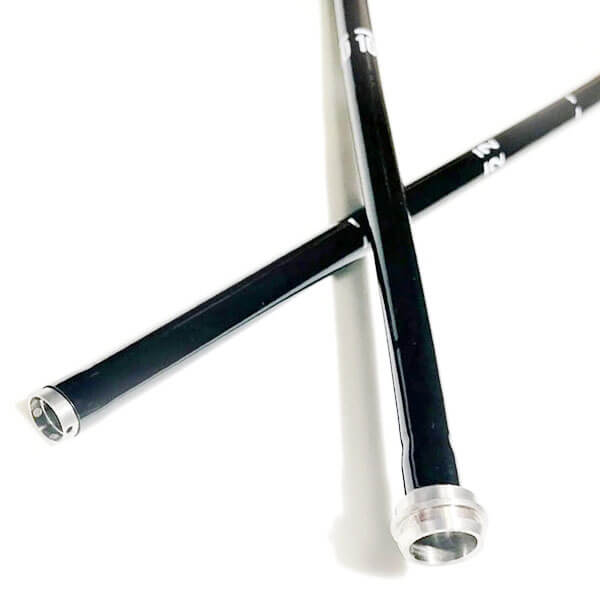
What separates a usable replacement part from a scrapped repair is mostly geometry. For an insertion tube, the inner diameter, wall lubricity, and stiffness gradient determine whether the internal bundle — biopsy channel, angulation wires, fiber bundles — can be threaded through without kinking the channel, crossing the wires, or breaking fibers. For a bending section, mesh dimensions and hole alignment determine whether the distal end reassembles cleanly. For seals and O-rings, material grade and dimensional accuracy determine whether the scope passes a leak test on the first attempt. Ask a supplier for dimensional specifications per model, batch traceability, and inspection records before you commit a bench technician’s time to the repair.
Incoming Quality Checks Before Installation
Every replacement part should pass an incoming inspection before it touches a scope. The table below covers the checks that catch most problem parts at the bench instead of at the final leak test.
| Component | What to inspect on arrival | Failure the check prevents |
|---|---|---|
| Insertion tube | Outer diameter, inner diameter, surface finish, stiffness along the length, condition of glued ends | Channel kinking, wire crossing, fiber breakage during re-tubing |
| Bending section | Mesh integrity, hole alignment, bending rubber thickness and surface condition | Distal end misalignment, repeat punctures, failed leak test |
| Angulation wires | Wire diameter, endpoint finish, freedom from kinks in the coil | Snapped wires, stiff controls, uneven deflection |
| Biopsy channel | PTFE wall condition, inner diameter against accessory specifications, freedom from scoring | Accessory drag, biofilm retention in scratched walls |
| Seals and O-rings | Material grade, dimensions, no permanent deformation in storage | Fluid invasion and CCD/CMOS damage after reprocessing |
After assembly, leak test before the scope touches any liquid — and treat a failed leak test as a stop condition, not a retest candidate. This matters beyond the repair bench: the FDA has documented that the narrow channels and the elevator recess of duodenoscopes are among the hardest areas of any device to reprocess, and that residual tissue or fluid in a compromised scope can transmit infection between patients (FDA, Infections Associated with Reprocessed Duodenoscopes). A scratch in a channel wall or a marginal seal turns a mechanical repair into an infection-control risk.
What to Include in a Repair Parts RFQ
Most quoting delays come from missing information, not from price negotiation. The table below is a working RFQ template: fill it in once per scope and your supplier can quote, check stock, and ship without a round of follow-up emails.
| RFQ field | Example entry | Why the supplier needs it |
|---|---|---|
| Brand, model, serial | Olympus GIF-H190, serial on control body | Pinpoints the exact part variant |
| Part name and photo | Insertion tube, photo of the failed assembly | Confirms the component before quoting |
| Key measurements | Working length, insertion tube OD, channel ID if known | Verifies dimensional match for the model |
| Symptom / failed component | Fluid invasion, leak test fails at distal end | Flags related seals and components to quote together |
| Quantity and lead time | 2 units, needed within 3 weeks | Enables stock check and shipping options |
| Destination and documentation needs | Country, any certificates required for import | Prevents customs and compliance delays |
Stocking Parts Around Your Repair Volume
Match your inventory to the failure distribution above. Bending rubbers, angulation wires, O-rings, and channel tubing behave like consumables — they fail on every busy fleet and tie up benches when they are out of stock. Insertion tube assemblies and light guide bundles are project parts: order them against scheduled repairs, but verify the supplier actually stocks the specific model rather than drop-shipping from an unknown source. A parts bench also runs on the right repair tools and fixtures, from seal presses and glue applicators to leak testers and torque-limited drivers.
Finally, invest in the technician before the part. Re-tubing and bending section rebuilds are among the most demanding flexible endoscope repairs, and a large share of scrapped components are damaged during installation rather than defective on arrival. Hands-on endoscope repair training shortens that learning curve measurably — and a trained bench pairing with verified parts is what turns a parts purchase into a completed repair. If you are quoting a specific scope, send the model, serial, and symptom and the CareUTech team will match the parts list for you.
Frequently Asked Questions
How often do flexible endoscopes need repair?
In the cystoscope study cited above, scopes required repair roughly once every two to three years of clinical use. Heavy-use scopes in high-volume units fail more often, and most of the damage traced back to handling and reprocessing rather than component fatigue.
Are compatible (non-OEM) repair parts acceptable?
Fit and safety depend on dimensional accuracy, material grade, and verification testing — not on the channel the part was purchased through. Ask any supplier for dimensional specifications, batch traceability, and quality system documentation, then confirm the completed repair with leak, angulation, and image tests before the scope returns to service.
Can a technician replace an insertion tube without factory training?
It is possible, but insertion tube and light guide tube replacements are widely regarded as the most difficult flexible endoscope repairs because the internal bundle is fragile and tolerances are tight. Structured hands-on training, practiced on scrap scopes before customer work, is the standard route to doing it reliably.