



Blog
Preparing for Endoscope Repair Training: Equipment, Decontamination, and Logistics

Most of the value of hands-on endoscope repair training is decided before the first bench hour. A trainee who arrives with the right device families chosen, the paperwork agreed, and the practice scopes decontaminated and shipped correctly spends the course working on the faults that actually fill their workshop’s intake. A trainee who arrives without those decisions made spends the course negotiating logistics. This article is a preparation plan for biomedical engineers, workshop leads, and training managers booking a hands-on course: what to decide, what to send, how to decontaminate and document equipment that crosses a border, and which questions to close with the provider before travel. It complements the course-content detail in the flexible endoscope training syllabus and the course-selection checklist already published here, and it stops short of the bench itself — that is the job of the training-bench article.
Decide the device families and the fault list first
Hands-on courses are organised by device family, and the family choice drives everything else: which scopes travel, which consumables are consumed, and which skills the sign-off can cover. Typical course structures separate flexible endoscopes, rigid endoscopes, camera heads, and ultrasound probes, each with its own task list — for flexible scopes, insertion tube replacement, bending section and angulation wire service, light guide bundle repair, leak testing and final performance verification. Match the family list to your workshop’s actual intake rather than to ambition: a hospital service that handles gastroscopes and colonoscopes gains little from a week of arthroscope distal window work.
Then make the fault list concrete. Collect your last three to six months of repair work orders and mark which failures the course should make your team independent on. The list becomes the agenda you send the provider, and it converts a generic quotation into a programme tailored to the models in your fleet. It also feeds the competency discussion later: a sign-off criterion can only be objective if the fault types were agreed in advance.
Decide what equipment travels with you
Providers differ in what they supply. Some train on their own stock of scopes and faults; others expect trainees to bring representative devices from their own fleet, which has the advantage that the skills transfer to the exact models your team services. Neither approach is wrong, but the equipment question must be answered in writing before travel, because it determines shipping, customs, and insurance work. Ask the provider three things: which device families and models they supply on-site, whether trainee-supplied scopes are welcome and under what condition rules, and which consumables and spare parts are included versus billed. Small-group teaching on real devices is the norm for serious providers, so group size — and therefore how much bench time each trainee gets — is part of the same conversation.
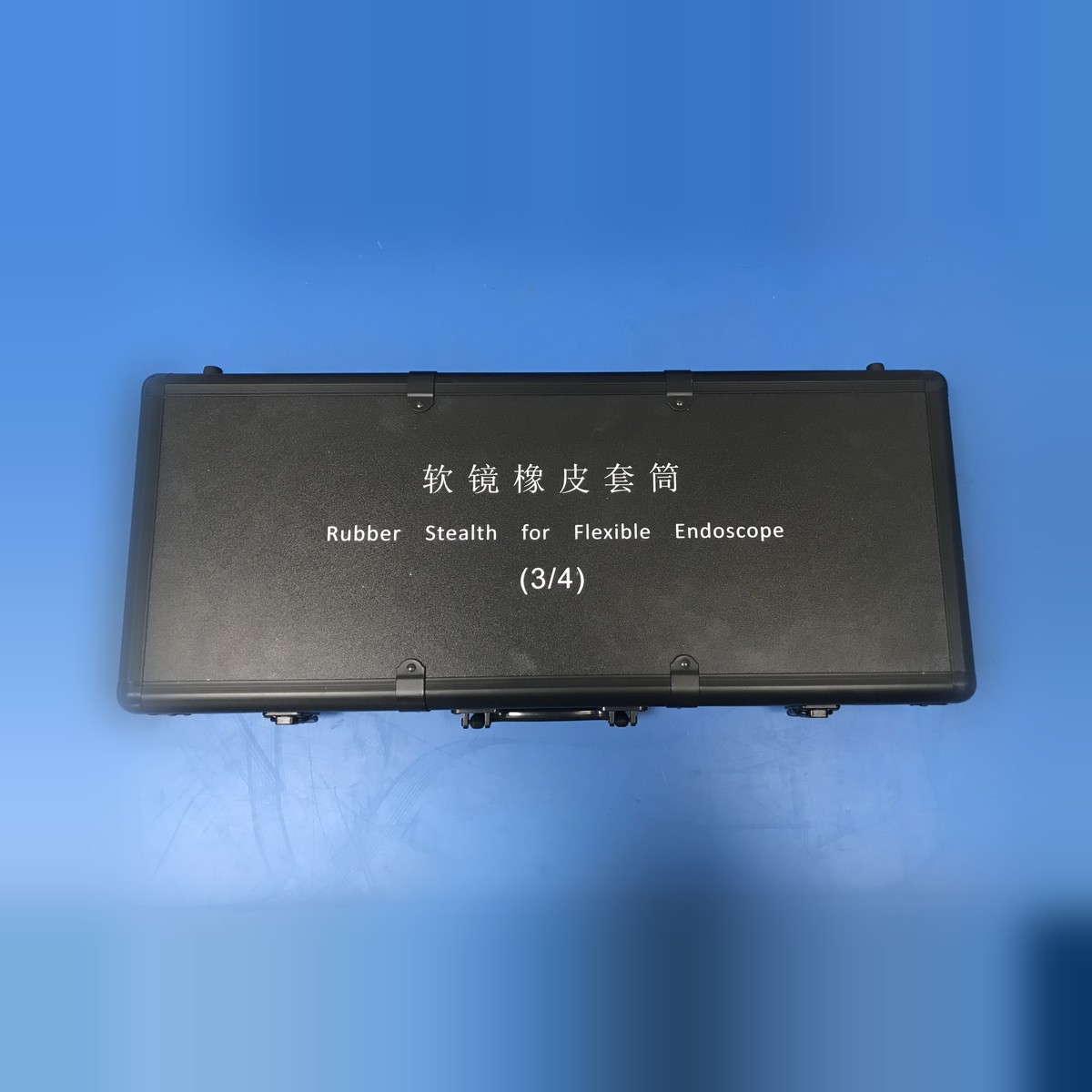
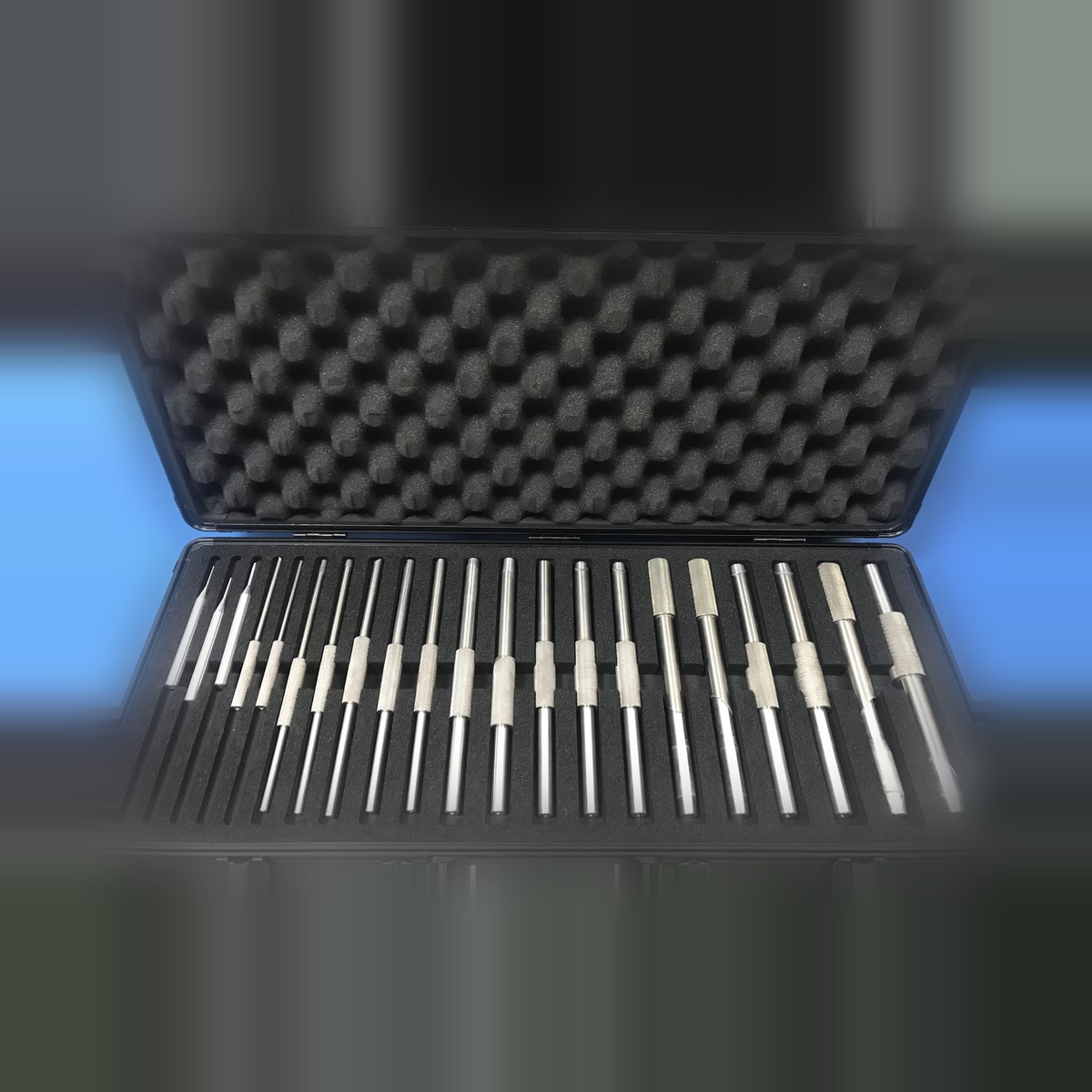
Bring, in every case, the accessories that make practice realistic: leak testers with the correct adaptors for your scope models, the valves and caps that your fleet uses, and any model-specific fixtures your workshop already owns. Training tool kits — the rubber sleeve tool sets, dilator sets, and CCD handling cases used on flexible-scope benches — are normally provided by the course, but confirm it, because tool availability is a common gap between quotation and bench.
Decontamination and containment before anything ships
Any device that has been in clinical use must be fully processed before it travels, and the paperwork matters as much as the chemistry. The ISO 17664-1:2021 framework requires manufacturers to provide processing information covering the full sequence — initial treatment at the point of use, preparation before cleaning, cleaning, disinfection, drying, inspection and maintenance, packaging, sterilization, storage, and transportation — and transportation is an explicit step in that sequence, not an afterthought. For flexible endoscopes specifically, ANSI/AAMI ST91:2021 governs the processing standard the scopes should have gone through, including leak testing as part of each reprocessing cycle.
Practically, a practice scope that ships to a course should arrive processed, dry, and documented:
- Run a full cleaning and high-level disinfection cycle per the manufacturer’s instructions, then dry the channels completely — a wet scope travels badly and corrodes internally.
- Leak test before packing, and attach the leak test result to the shipment; do not ship a scope that failed.
- Store and transport the scope per its instructions: control body protected, insertion tube coiled at the specified diameter, in a rigid transport container, with valves removed and capped where the design requires it.
- Attach a decontamination declaration stating the method, date, and responsible person, plus a fault description — the provider can pre-seed matching faults only if they know what they are receiving.
Packing, shipping, and customs realities
International shipment of used medical devices adds paperwork that a domestic courier run does not. Customs authorities will ask what the items are, what they are worth, and where they are going, and import rules for used medical equipment vary by country — which is why the provider should confirm the required shipping documentation for their own customs clearance before anything is booked. Build the shipment around a written packing list with model, serial number, and declared condition for every item, a commercial invoice that describes the goods accurately (repair training equipment, used, decontaminated — with a realistic value), and transit insurance that covers the replacement value of each scope, because a training shipment is not covered by ordinary courier default terms.
Plan the physical packing as if the scopes were customer repairs in transit: rigid cases, insertion tubes coiled at the specified diameter, cushioning that prevents load on the control body, and valves and small parts bagged and labelled separately. Photograph every item before packing and again in the case — the photos settle any transit-damage dispute in minutes. Finally, agree in advance what happens if a scope arrives damaged: who inspects on receipt, who pays for consequential damage, and what the fallback is (usually the provider’s own stock of that model family). That single paragraph in the booking email prevents the most common post-course argument.
Bring skills evidence, not just equipment
A course teaches fastest when the instructor knows the starting point. Bring the pre-course evidence listed below; it takes an afternoon to assemble and lets the provider pitch the depth correctly instead of re-teaching basics or, worse, assuming skills the team does not have.
| Item to bring | Why it matters on the bench | Format |
|---|---|---|
| Fault list from recent work orders | Aligns practice faults with real intake; prevents generic teaching | One page per device family, anonymised |
| Technician skill self-assessment | Lets the instructor split groups by starting level | Short checklist per technician: leak testing, disassembly, assembly, testing |
| Scope models and serial ranges in service | Model-specific part matching is a course outcome, not an accident | Fleet list with processor series compatibility |
| Current acceptance criteria, if any | Sign-off criteria can be upgraded rather than invented during the course | Existing work-order test sheets |
| Decontamination certificates for shipped scopes | Required for processing and for customs paperwork | One declaration per scope |
Agree the sign-off criteria before day one
Competence evidence is the deliverable that survives the course. Before travel, agree with the provider what “passed” will mean: which tasks each technician must perform unaided, on which device types, against what recorded criteria — for a flexible-scope module, typically a leak test run and interpreted correctly, a disassembly-reassembly sequence completed without damage, and a final performance verification recorded on a test sheet. Education standards for healthcare technology management programmes make that structure explicit; the AAMI equipment-management series, including the education-programme standard EQ110:2024, frames objectives and competency assessment for HTM training. Keep the credential claim honest, too: a course completion record documents what was performed on the bench, while an individual certification such as the AAMI CBET — a three-hour, 165-question examination — is a separate, personal credential with its own eligibility rules. A good course feeds the first and helps a technician decide about the second; it does not substitute for it.
Published training research supports the structure. A two-week surgical instrument repair training programme reported 36 participants repairing 1,623 instruments with a 99.6% repair success rate, and half of the participating hospitals went on to establish their own repair workstations (Udeigwe-Okeke and colleagues, Frontiers in Public Health, 2025). The same programme’s logistics — participants brought faulty instruments from their own facilities, and the course opened with laboratory setup and safety procedures — are a usable template for the preparation this article describes. In the endoscopy domain, structured inspection and competency testing with borescopes is likewise documented: the large single-centre programme that made borescope inspection routine recorded major repairs falling from 12.1% to 3.2% of repairs and mean cost per repair falling from USD 4,426 to USD 2,337 (P<0.001) (Ofstead and colleagues, 2024), with the inspection and competency-testing practice embedded in staff training.
A preparation timeline that fits real workshops
| When | Action | Output |
|---|---|---|
| 6–8 weeks out | Choose device families from work-order data; shortlist providers; request outlines, group size options and quotations | Course brief with fault list attached |
| 4–6 weeks out | Confirm equipment rules in writing: provider-supplied versus trainee-supplied scopes, consumables, tool kits; confirm shipping documentation needs | Booking confirmation with equipment annex |
| 3 weeks out | Collect and process the practice scopes; leak test, decontaminate, dry, and pack; assemble insurance and customs paperwork | Shipment with packing list and declarations |
| 1–2 weeks out | Send skill self-assessments and acceptance criteria; agree sign-off criteria and record formats with the instructor | Written competency plan |
| Course week | Verify received equipment against the packing list on arrival; photograph condition; confirm daily objectives | Receiving record and course log |
| After the course | File signed sign-off records; schedule reassessment; update the workshop’s work-order templates to carry the new acceptance fields | Audit-ready competence evidence |
CareUTech’s own repair training service runs small-group, hands-on courses at the Guangzhou facility or on-site at the customer’s hospital, across flexible endoscopes, rigid endoscopes, camera heads and ultrasound probes, with course outline, duration, group size options and quotations provided on request — which is exactly the information the timeline above needs at week six. The model-specific part-matching skills covered in the flexible endoscope training syllabus and the course-selection questions in the training course checklist slot directly into the equipment annex, and the bench assets a hospital needs for follow-up practice are costed in the training bench article. To confirm shipping documentation and equipment rules for a specific course, send the device families, models, and preferred dates before booking travel.