


Blog
Patient Monitor Module Faults: SpO2, NIBP, and ECG Accessory Triage

When a patient monitor shows a dead trace, a “–” reading, or a pressure alarm that never clears, the fault is more often in a cable, sensor, cuff, or hose than inside the monitor. That matters because the fix for an accessory fault is a low-cost replacement part and the fix for a module fault is board-level service or a costly exchange. This guide walks through a structured triage method for SpO2, NIBP, and ECG faults on multi-parameter monitors, the checks that separate accessory wear from module failure, and the spares that keep a repair shop or hospital shop stocked.
Why Triage Starts at the Accessories
ECG leadwires, SpO2 sensors, and NIBP cuffs and hoses are handled, flexed, tugged, and occasionally run over by equipment carts every day; the monitor itself mostly sits on a shelf or wall arm. In bench practice, accessory faults dominate the intake queue precisely because those parts absorb the mechanical wear. A large reusable SpO2 sensor, for example, contains LEDs, a photodetector, and a multi-conductor cable that flexes at the same strain points thousands of times in service — cable fatigue and connector damage are the expected failure modes, not the exception.
The standards framework treats the accessory as part of the measured system, not an add-on. The pulse oximeter standard ISO 80601-2-61:2026 applies to the monitor, the probe, and probe cable extenders, and its scope explicitly covers equipment regardless of origin, including remanufactured products — a clear signal that properly serviced accessories remain within the intended use envelope. Similarly, the ECG monitoring standard IEC 60601-2-27:2011 covers the monitoring equipment together with its electrodes and cable sets.
Accessory-first triage also protects the monitor. Swapping parts between a suspect unit and a known-good one, or testing accessories on a bench harness, isolates the fault before anyone opens the monitor housing.
ECG Faults: No Trace, Artifact, and Lead-Fail Alarms
ECG complaints cluster into three patterns. A single “lead fail” alarm usually points to that leadwire or its snap connection; a total loss of signal on all leads points upstream to the ECG trunk cable or its connector; and noisy, wandering traces point to electrode contact, but trunk-cable strain damage can mimic it. The triage sequence that resolves most cases:
- Isolate the leadwire. Substitute the suspected leadwire with a known-good one on the same electrode. If the alarm clears, replace the leadwire.
- Test the trunk cable. Flex the cable gently near both connectors while watching the trace. Dropouts under flex indicate conductor fatigue inside the cable jacket — a replacement, not a repair.
- Check the connector. Bent, recessed, or corroded pins in the monitor’s ECG connector cause intermittent multi-lead faults that get misdiagnosed as module failure.
- Rule out the electrodes. Dried-out electrodes cause artifact on all leads at once; swapping accessories confirms or excludes this in one step.
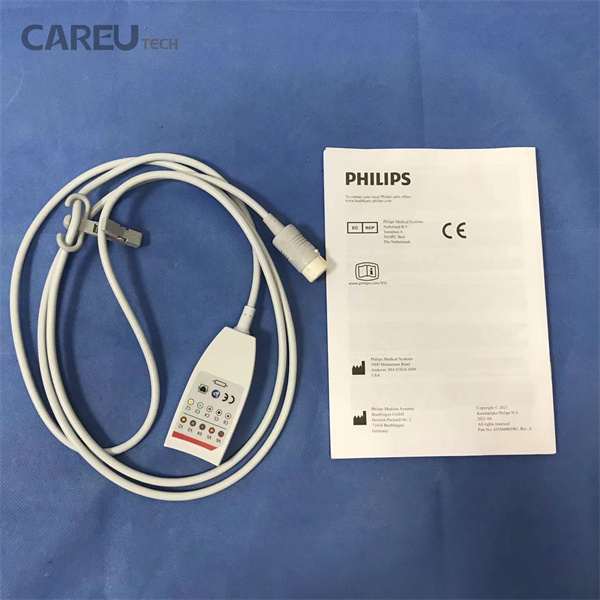
Trunk cables and leadwires are consumable-grade parts for most repair shops. Philips, GE, and Mindray trunk cables such as the M1663A, and multi-link leadwire sets for GE monitors, are widely available as replacement parts, and stocking them turns a same-day fix into an intake appointment rather than a purchase order cycle.
SpO2 Faults: Sensor Not Detected, Weak Signal, and Questionable Values
Pulse oximetry faults usually announce themselves as a sensor error, a persistent low-signal or low-perfusion warning, or readings that look implausible against the patient’s condition. Work through these checks:
- Sensor not detected: inspect the sensor connector for bent or pushed-in pins and the cable for kinks. A failed LED or photodetector inside the sensor produces the same screen message; a replacement sensor distinguishes them.
- Weak or intermittent signal: examine the cable strain reliefs, especially where the cable enters the sensor housing, and check for internal conductor breaks by flex-testing with a waveform on screen.
- Questionable accuracy: confirm the sensor type matches the monitor’s settings, check for extension cable joins mid-path, and test the sensor on a healthy volunteer or a bench simulator before blaming the monitor module.
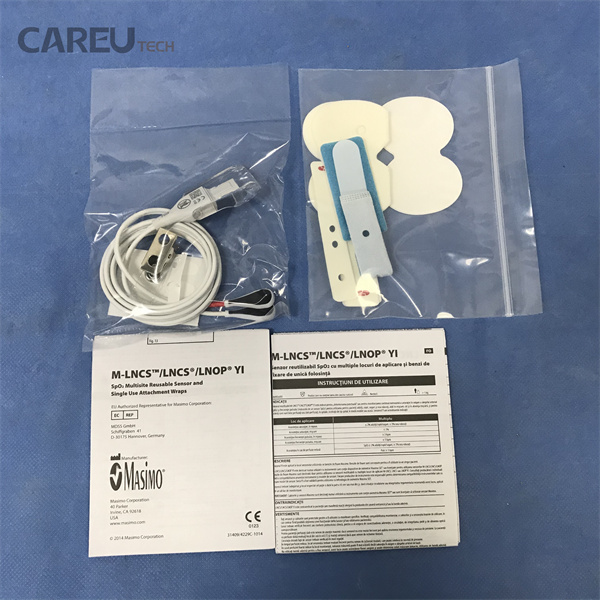
Compatibility is the first sourcing decision, not the last check. SpO2 technology is platform-specific: Masimo, Nellcor, and GE sensors use different measurement algorithms and connector protocols, so a sensor from one technology family cannot simply be cross-matched to a monitor built for another. Confirm the monitor’s SpO2 module type and the sensor’s technology match before ordering, and the same discipline applies to extension cables — an interconnect cable is not interchangeable between technologies even when the connector looks similar. Reusable sensors from Masimo, Nellcor, and GE lines, plus their extension and interconnect cables, are standard stock items; our patient monitor parts catalog lists sensor and cable replacements by technology family. Note that probe cable extenders and sensors fall under the same ISO 80601-2-61:2026 requirements as the monitor itself, so replacements should come from suppliers who document compatibility rather than from unverified sources.
NIBP Faults: Leaks, Errors, and Connector Damage
Non-invasive blood pressure problems are almost always pneumatic. The monitor’s pump and valve block is the expensive part; the cuff, hose, and connectors wear out. A structured leak test separates them quickly:
- Static leak check: connect the suspect cuff and hose, inflate to a mid-range pressure with the monitor in a service or leak-test mode, and observe pressure decay with the hose occluded. Steady decay indicates a leak in the cuff bladder, hose, or connectors.
- Segregate cuff from hose: substitute a known-good hose, then a known-good cuff, to locate the leaking element.
- Inspect connectors: cracked hose nipples and worn latch fittings cause intermittent faults that appear only when the cuff moves; check fittings under gentle flex before condemning the hose itself.
Cuff selection deserves its own check before any electrical or pneumatic diagnosis. An incorrectly sized cuff — too small for the limb, or wrapped too loosely — produces readings that look like instrument error but are measurement-condition error. Verify cuff size against the patient population the unit serves and the limb circumference markings printed on the cuff before condemning hardware. When a replacement is needed, match hose length and connector type to the monitor rather than adapting fittings; NIBP connectors in modern equipment follow the ISO 80369 series per IEC 80601-2-30:2018, so mismatched or damaged fittings should be replaced with the correct keyed type rather than adapted. Clinical validation of the measurement itself is governed by ISO 81060-2:2018 for automated sphygmomanometers — relevant to shops that remanufacture or recondition NIBP modules, since measurement claims must remain supported after service. For routine repair, the practical rule stands: fix the pneumatic path first, escalate to module service only when a known-good cuff and hose reproduce the fault.
Bench Test Equipment and Repair Records
Triage quality depends on what the bench can verify. Three instruments carry most of the load: an ECG patient simulator that produces known waveforms and rates, a SpO2 simulator (or, at minimum, a controlled test against a healthy volunteer with documented conditions), and a pressure source with a calibrated gauge for NIBP leak and overpressure checks. A shop without simulation still triages effectively using substitution — known-good accessories against the suspect unit — but simulators make the result reproducible and defensible when the same monitor returns a month later with a related complaint.
Records matter as much as instruments. Log the accessory serial or part number used in every test, the substitution steps taken, and the final confirmed fault. Accessory fault histories reveal patterns: a trunk cable model that fails at the same strain relief every few months, or a SpO2 sensor line whose connector design invites pin damage. Those patterns drive both the stocking plan and the supplier conversation, and shops operating under a quality system can feed them directly into corrective-action records.
A Triage Workflow You Can Post at the Bench
| Complaint | First checks | Likely replacement | Escalate to module service when… |
|---|---|---|---|
| Single ECG lead-fail alarm | Swap that leadwire; check electrode contact | Leadwire | Good leadwire and electrodes still alarm on the same channel |
| All ECG leads lost | Inspect monitor connector pins; flex-test trunk cable | ECG trunk cable | Known-good trunk cable shows no signal on a known-good monitor |
| SpO2 sensor not detected | Check connector pins and cable kinks; try another sensor | SpO2 sensor or extension cable | Multiple known-good sensors all fail to detect on the same monitor |
| SpO2 low signal / frequent dropouts | Flex-test strain reliefs; test on volunteer or simulator | SpO2 sensor cable | Readings remain unstable with a verified sensor on a verified monitor |
| NIBP error / pressure won’t hold | Static leak test; segregate cuff vs hose | NIBP hose, cuff, or connectors | Leak persists with a verified cuff and hose set |
| NIBP readings implausible | Confirm cuff size and placement; repeat with verified set | Cuff (correct size) | Verified cuff and hose reproduce the offset consistently |
When a module does reach board-level service, document the accessory set used during testing. Adverse-event reports submitted to the FDA MAUDE database regularly involve monitoring cables and sensors, and reviewing the report history for a specific cable type is a useful screening step before committing to a parts source.
Stocking Plan for Monitor Repair Shops
| Part group | Why it moves fast | Stocking note |
|---|---|---|
| ECG trunk cables and leadwires | Daily handling wear; snap connectors and strain reliefs fail first | Stock per installed monitor brand (Philips, GE, Mindray); keep a complete leadwire set per five monitors in service |
| Reusable SpO2 sensors and extension cables | Fatigue at the sensor housing entry; connector pin damage | Match sensor brand to the monitor’s SpO2 technology (Masimo, Nellcor, GE); verify connector keying |
| NIBP hoses, cuffs, connectors | Pneumatic wear, cracking, latch fatigue | Stock adult and pediatric sizes; hoses fail more often than cuffs |
| Temperature probes and interface cables | Similar flex failure profile to SpO2 cables | Lower volume; reorder against observed demand |
Shops expanding beyond monitors into the imaging and scope side of the bench will find related workflow guides in our repair case library, and hands-on instruction through our repair training courses.
Need a specific trunk cable, SpO2 sensor, or NIBP hose for the monitors in your fleet? Send the brand and model through our contact page and we will confirm fit before you order.