



Blog
Rigid Endoscope Repair Training: Curriculum, Bench Skills, and Objective Sign-off

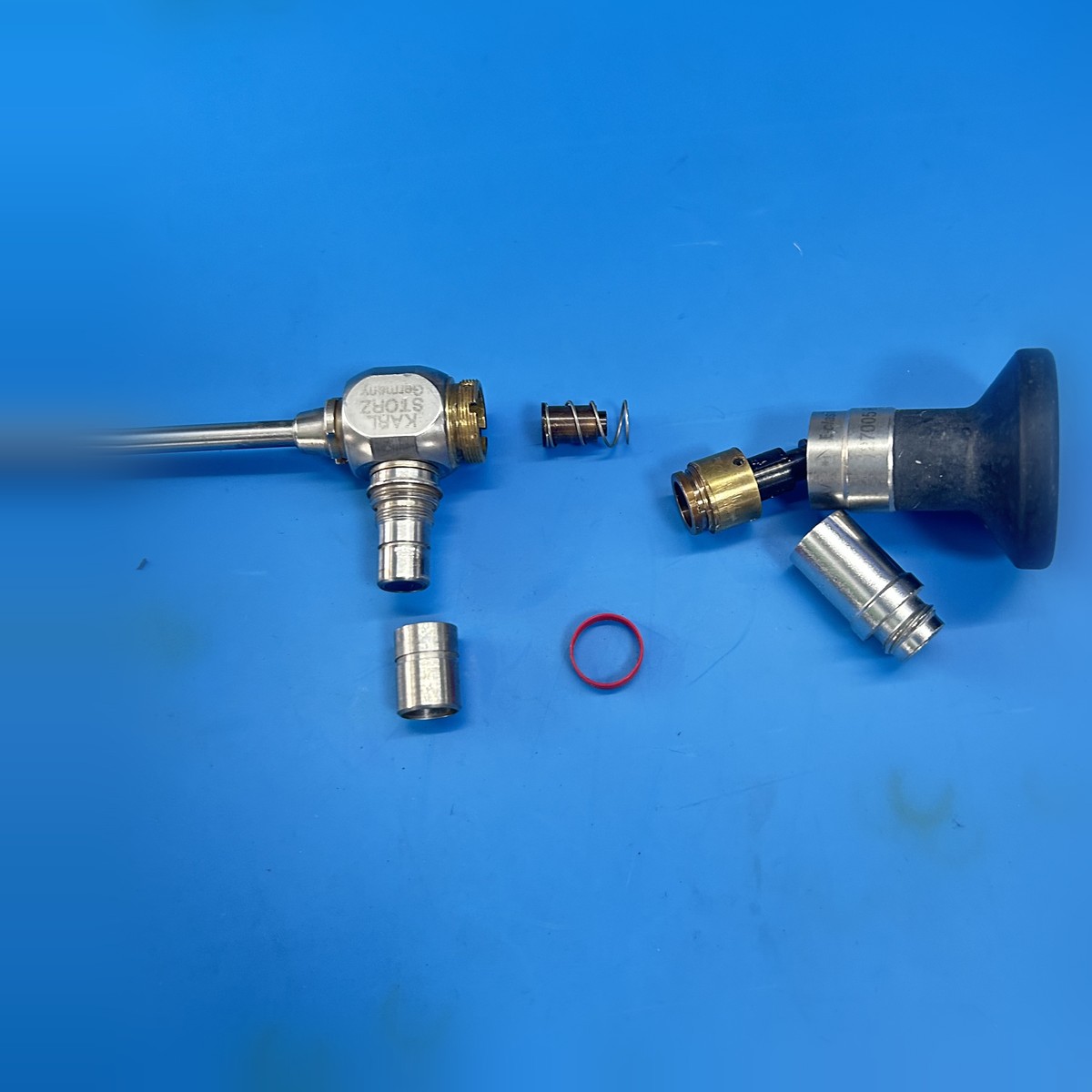
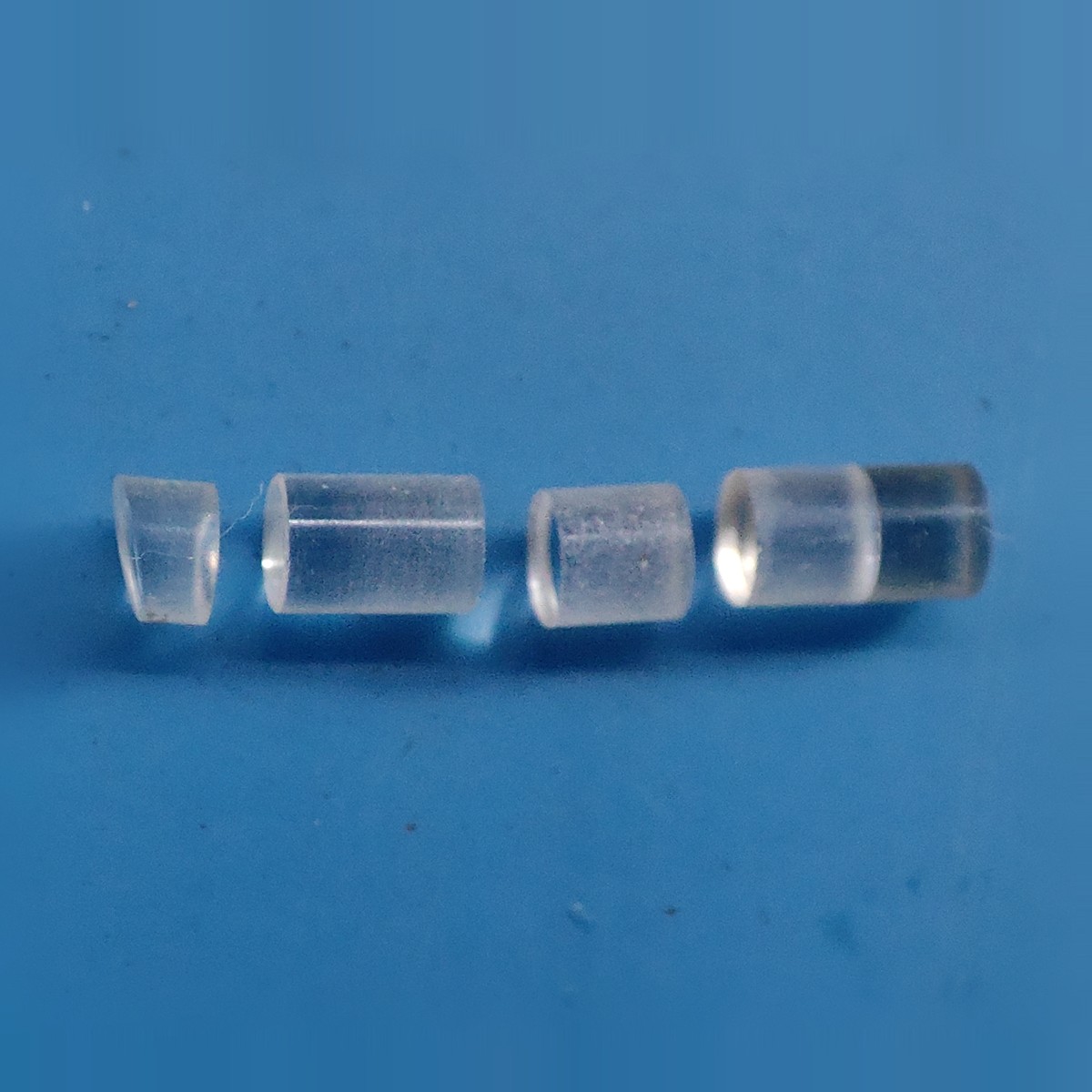
A rigid endoscope repair course is not a short version of a flexible-scope course. The instrument is a sealed optical telescope that goes through steam sterilisation, its failures are measured rather than seen, and the skill that matters most is the ability to record an objective acceptance value and act on it. A trainee who can disassemble a bending section is not thereby prepared to judge a rod-lens stack, detect moisture inside a shaft, or decide whether a repaired telescope is fit to return to the operating room. This article sets out how to design and evaluate a rigid-scope-specific training programme: the measurement discipline that anchors it, a module-by-module curriculum, the seeded faults and bench evidence each module needs, and the sign-off record that turns course attendance into demonstrable competence. It complements, rather than repeats, the flexible endoscope training syllabus (which is organised around three scope platforms), the multi-device programme design guide (which sequences device families over a career path), and the rigid endoscope failure-mode guide (which describes how the instrument fails). This one is about how the skills are taught and signed off.
Why rigid scopes need their own course
A rigid telescope carries two separate optical paths: an illumination fibre bundle that carries light to the surgical field, and a rod-lens viewing system that carries the image back to the eyepiece. It is repeatedly autoclaved, handled in trays, and inspected in a central sterile department rather than in a workshop. That combination produces a failure profile — moisture ingress, lens breakage, coating damage, fibre transmission loss, seal degradation — that is different enough from flexible-scope damage to justify its own bench skills and its own acceptance criteria. ISO 8600-1:2025, the general standard for endoscopes, is a useful starting reference for the terminology and requirements a course should use consistently, so that trainees learn one vocabulary for optical and mechanical quality rather than a collection of workshop shorthand.
The case for measurement-based training was made clearly in a clinical setting study. Wientjes and colleagues built an opto-electronic test bench in a sterilisation department and reported 1,599 objective measurements on 288 rigid endoscopes covering 46 different types over an eight-month period (PLOS ONE, 2013). Their system stored illumination-fibre transmission and lens-contrast values in a database specifically so that acceptance and rejection criteria could be empirical rather than subjective; the authors set acceptance for new, refurbished, or repaired scopes at a conservative fraction of the best instrument of the same type, and rejection at a lower level, and they used cold spray on the eyepiece to detect moisture that a visual check would miss. They also noted that endoscopes generally improved after repair or replacement, with replacement slightly outperforming repair. The lesson for a curriculum is direct: a rigid-scope technician must be taught to measure, to compare against a reference, and to record the result — not simply to look through the eyepiece and offer an opinion.
Set objective entry and exit measurements first
Before a course outline is written, agree what the trainee will be able to measure at entry and what they must achieve at exit. Modern rigid-scope test systems measure several parameters: light transmission through the lenses (LT), fibre transmission through the illumination fibres (FT), focus or sharpness, colour correctness, view angle, and field of view. LT and FT are the two that degrade earliest and therefore carry most of the decision. A large multi-centre analysis of more than 500,000 measurements from 95 ScopeControl test systems worldwide, covering 2014 to 2023, reported that endoscope lifespan ranged from 15 to 400 usages and that failures were often sudden, caused by broken lenses after mechanical or thermal shock (Noordmans and colleagues, 2025). The same study found that repaired endoscopes had a median lifespan around 30% shorter and median light transmission about 11% lower than new instruments. Its full report describes the default rejection thresholds — lens quality below 70% of a new instrument, or fibre transmission below 30% — and the six measured parameters listed above (PMC12517457). It also reports that repaired scopes can return with lens transmission up to 15% lower and fibre transmission up to 20% lower than a new instrument, which is precisely the kind of finding an entry measurement is meant to catch.
Those numbers are not course targets to be copied into every hospital’s policy; the same paper notes that accepted thresholds can vary with clinical application and the cost of replacement. They are, however, an excellent teaching structure. A curriculum built around them forces three habits that separate a trained technician from a careful amateur: measure on receipt before any work begins, measure again after the repair, and record both values so the effect of the repair is visible. An entry measurement also protects the training provider and the customer: a scope that arrives already below threshold should be discussed before a trainee is asked to “fix” it.
A module-by-module curriculum
With the measurement discipline fixed, the course can be organised as a sequence of modules, each with a defined bench task, a station, and an objective sign-off criterion. The table below is a template; the actual values in the right-hand column come from the instrument manufacturer’s documentation and the objective test system in use, not from a generic article.
| Module | Bench skills taught | Station and equipment | Objective sign-off criterion |
|---|---|---|---|
| Receiving inspection and baseline measurement | Identify model and serial, inspect shaft and eyepiece, measure LT/FT/focus/colour/view angle, apply cold spray to detect moisture, record a baseline | Objective test bench or ScopeControl-type system; inspection light; reference instrument of the same type | Complete recorded entry measurement with all parameters and a written disposition before any disassembly |
| Optical path: rod lenses and spacers | Disassemble the lens stack in order, handle coated lenses without touching optical faces, identify cracked or coated-damaged elements, track spacer order and orientation | Clean bench, lens handling fixtures, labelled trays, magnification; documented assembly sequence | Reassembled stack meets the measured LT and focus criteria against the same-type reference |
| Illumination path: fibre bundle | Inspect fibre ends, identify dark or broken fibres, assess transmission loss, understand coupling to the light post | Light source, fibre transmission measurement, inspection magnifier | Measured FT at or above the agreed acceptance value; damage map recorded |
| Seals, moisture, and autoclave integrity | Inspect seals and cemented joints, perform a moisture check, understand what repeated sterilisation does to a seal | Cold-spray or equivalent moisture test, pressure or leak check where the design allows, seal dimension gauges | No moisture detected; seal dimensions and condition recorded; repeat test after a defined simulated cycle |
| Mechanical assembly and alignment | Reassemble shaft, eyepiece, and light post to the correct torque and alignment; avoid pre-loading optical components | Torque-controlled tools, alignment fixtures, assembly jig | View angle and field of view within the reference range; no image vignetting or decentration |
| Final performance verification and release | Repeat the full measurement set, compare with the entry baseline, complete the acceptance record, decide release or reject | Same objective test bench as module one, so values are comparable | Signed acceptance sheet with entry and exit values, disposition, and inspector name |
Two design choices in that table matter more than the individual tasks. First, the same measurement equipment is used at entry and at exit, because a comparison between two different instruments is not evidence. Second, every module ends in a recorded value rather than an instructor’s approval; the sign-off is a document, which is what an auditor or a hospital customer can actually examine afterwards.
Seeded faults and the bench evidence they produce
Hands-on rigid-scope training needs practice instruments with known, deliberately introduced faults, so that the trainee’s measurement can be checked against a known answer. This is a curriculum question — which faults, which evidence, which sign-off — rather than the facilities question of how to build and stock a teaching bench, which is covered separately in the training bench guide. The mapping below keeps the two distinct: it lists what the instructor seeds and what the trainee must produce as evidence.
| Seeded fault in a practice telescope | Training task it drives | Measurement or inspection that reveals it | Evidence filed at sign-off |
|---|---|---|---|
| Cracked or chipped rod lens | Optical-path disassembly, lens handling, stack reassembly in correct order | Entry LT and focus measurement; magnified inspection of internal lens surfaces | Before/after LT and focus values with a damage description and the retained lens |
| Degraded illumination fibres | Fibre-end inspection and transmission assessment; decide repair versus replacement | FT measurement against the same-type reference; dark-fibre count at the fibre end | Recorded FT value and a fibre-end map |
| Moisture or failed seal | Seal inspection, moisture detection, reassembly to restore the barrier | Cold-spray moisture check; pressure or leak check where the design permits | Moisture test result before and after, seal dimensions, and the repeat test record |
| Decentred or mis-spaced optical stack | Alignment and spacer-order discipline during reassembly | View angle, field of view, and image vignetting checks | Measured view-angle/field-of-view values against the reference instrument |
| Coating or colour-shift damage | Recognise thermal or chemical alteration of lens coatings or adhesives | Colour-correctness measurement plus visual comparison with a reference | Colour-correctness value and a written disposition on whether the element is reusable |
Because failures in rigid scopes are often sudden — the 2025 multi-centre analysis attributes many to broken lenses after mechanical or thermal shock — a useful course also teaches the trainee to recognise a scope that has degraded between two scheduled checks and to escalate rather than attempt an improvised repair. The Noordmans study’s recommendation of entry measurements, and its observation that repaired instruments do not always return to new-instrument quality, are both arguments for teaching conservative, documented release decisions rather than speed.
Sign-off, records, and reassessment
Competence evidence is the deliverable that survives the course. A sign-off record should name the task, the instrument type, the objective criterion, the measured result, the date, and the instructor, and it should be filed in a form the employer can audit. Education standards for healthcare technology management support that structure: the AAMI equipment-management series includes EQ110:2024, the standard for HTM education programmes, alongside the equipment-management standards that call for written procedures, inspection records, and documented competency. At the organisational level, ISO 13485:2016 covers servicing within its scope, so a repair provider’s training records sit inside the same quality system as its work orders and acceptance sheets.
Keep the credential claim precise. A course completion record documents that a technician performed defined tasks on defined instruments against recorded criteria. It is not an individual professional certification. The AAMI CBET credential, for example, is a separate personal qualification with its own eligibility paths and a three-hour, 165-question examination covering six content domains. A well-designed rigid-scope course feeds the first and helps a technician decide about the second; it does not substitute for it. Any provider that blurs that distinction in a quotation is worth questioning during evaluation.
| Sign-off field | What it records | Reassessment trigger |
|---|---|---|
| Task and instrument type | Which module was performed, on which telescope model and serial | New model family introduced into the fleet |
| Objective criterion | The measured parameter and the acceptance value used, with the source of that value | Acceptance criteria updated by the manufacturer or the hospital |
| Measured result | Entry and exit values from the same test equipment | Two consecutive repairs failing to meet the exit criterion |
| Inspector and date | Who signed off and when; instructor signature for the course record | Return to the bench after an extended period without rigid-scope work |
| Disposition | Released, rejected, or referred for a higher-level repair decision | Any field return traced to that technician’s work |
| Retraining action | What was re-taught and the date the reassessment was passed | Audit finding, a new test system, or a changed reprocessing or sterilisation process |
Questions to put in the training RFQ
A request for quotation is where the curriculum above either exists or does not. Ask which rigid telescope families and models are used on the course, whether trainees may bring representative instruments from their own fleet and under what decontamination and documentation rules, and which objective measurement equipment is used at entry and at exit. Ask for the module list with the sign-off criterion attached to each, the number of practice instruments per trainee, and the format of the completion record. Ask whether the course covers moisture detection, seal inspection, and rod-lens handling explicitly, since those are the skills that distinguish rigid-scope work. Ask what the provider supplies versus what the customer must bring, and confirm the group size, because bench time per trainee is the resource that determines whether a sign-off is meaningful. Finally, ask how the course distinguishes its completion record from personal certification; the answer tells you a great deal about the provider’s rigour.
CareUTech’s repair training service runs small-group, hands-on courses at its Guangzhou facility or on-site at the customer’s hospital, across flexible endoscopes, rigid endoscopes, camera heads, and ultrasound probes, with real-device practice and course outline, duration, group size options, and quotations provided on request — exactly the information the RFQ questions above are designed to collect. The training course evaluation checklist gives the buyer-side questions to ask of any provider, and the multi-device programme design guide shows where a rigid-scope module fits in a longer development path. To discuss a rigid-scope-specific course, send the telescope models in your fleet, the objective test equipment you use, and the faults you want the team signed off on before booking travel.