


Blog
OEM vs Compatible Endoscope Repair Parts: A Risk-Control Framework for Sourcing


Choosing between an OEM endoscope repair part and a compatible one is not a question of brand loyalty. It is a question of dimensional fit, material behaviour, traceability, and whether the substituted component changes the finished device’s performance, safety specifications, or intended use. That last phrase matters: it is close to the language the U.S. Food and Drug Administration uses to draw the line between servicing and remanufacturing. For an independent service organization (ISO), a hospital biomedical engineering team, or a procurement officer building a spare-parts inventory, the decision should come out of a documented evaluation, not a price list. This guide sets out a risk-control framework for qualifying compatible endoscope repair parts: what to ask a supplier, what to measure on incoming inspection, where the regulatory boundary sits, and when an OEM part is the defensible choice.
What is actually being substituted
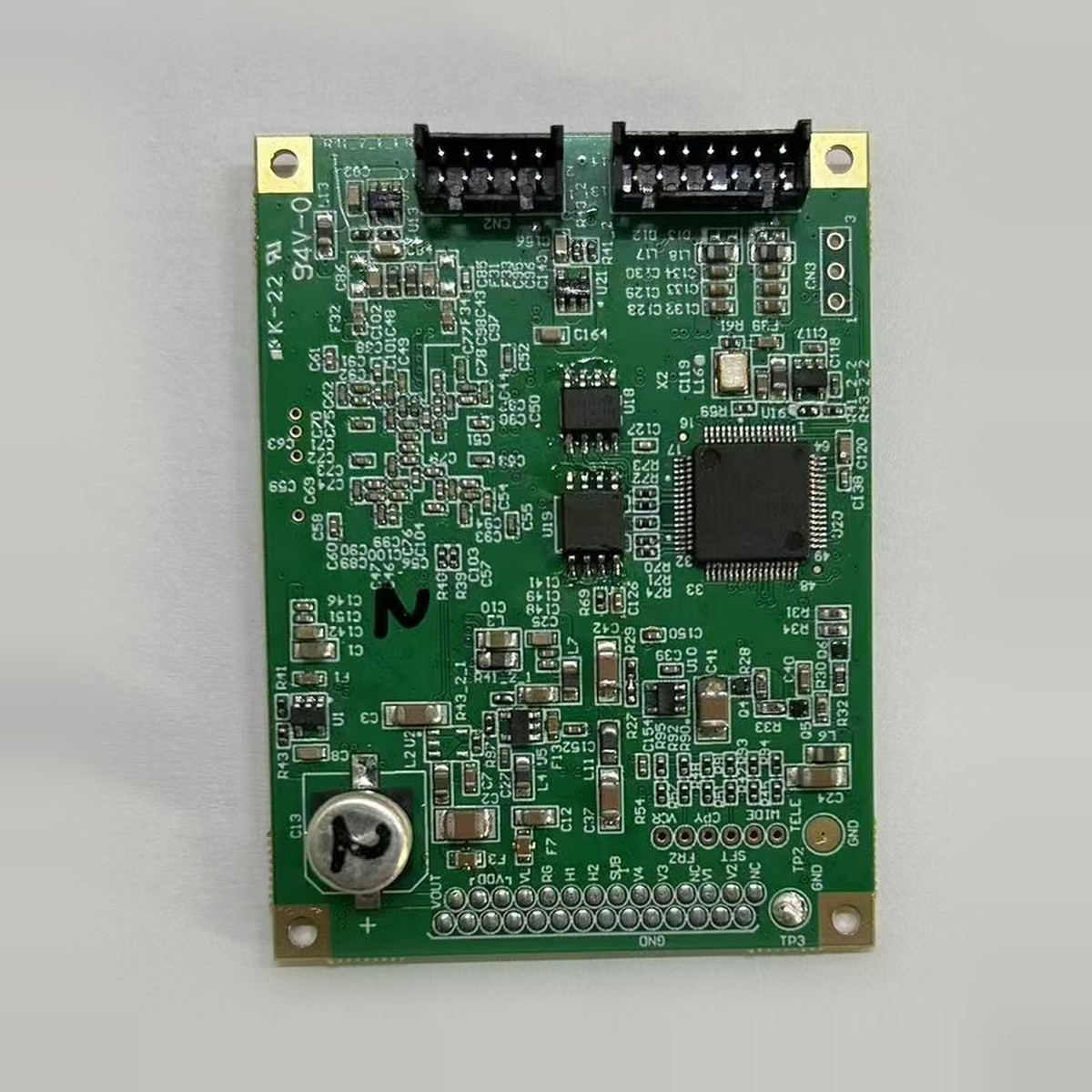
A flexible endoscope is an assembly of tightly coupled subsystems. A bending section, an insertion tube, an angulation wire and its coil pipe, a biopsy channel, an air/water valve set, a CCD driver board, and a light-guide bundle each have their own geometry, material, and tolerance stack. A replacement part is “compatible” only in relation to a specific scope model and often a specific revision of that model. A part that fits one Olympus GIF-series gastroscope may not fit another revision of the same family, and a Pentax board is not interchangeable with a Fujinon board simply because both sit behind the distal tip.
Before comparing OEM and compatible supply, define the interface you are buying against. Record the scope manufacturer, model, serial number, and revision; the OEM part number if one exists; the mating components; and the functional requirement the part must satisfy. Without that specification, a “compatible” claim is unverifiable. A practical starting point is a sourcing guide for flexible endoscope repair parts, which sets out how model matching works across Olympus, Pentax, and Fujinon scopes.
The regulatory line: servicing versus remanufacturing
In the United States, the distinction between servicing and remanufacturing determines which regulatory obligations apply. The FDA’s final guidance Remanufacturing of Medical Devices, issued in May 2024 under docket FDA-2018-N-3741, defines servicing as repair and/or preventive or routine maintenance of one or more parts in a finished device, after distribution, for the purpose of returning it to the safety and performance specifications established by the OEM and to its original intended use. Repair is described as a type of servicing that returns a component to the OEM’s original specifications, including replacing non-working components or parts outside preventive or routine maintenance.
Remanufacturing, by contrast, is processing, conditioning, renovating, repackaging, restoring, or any other act done to a finished device that significantly changes its performance or safety specifications, or its intended use. The same guidance defines third-party servicers and independent service organizations (ISOs) as entities other than the OEM or the healthcare delivery organization that maintain, restore, refurbish, repair, or service a finished device after distribution to return it to OEM specifications. One of the guiding principles is directly relevant to part selection: the FDA recommends assessing component, part, and material dimensional and performance specifications, and notes that deviations from the OEM’s legally marketed device may result in significant changes to performance or safety specifications, potentially requiring an engineering analysis, verification and/or validation testing, or a risk-based assessment.
The practical implication for a repair shop is concrete. A like-for-like replacement that restores original specifications is servicing. A substitute part whose dimensions, material, optical behaviour, or electrical characteristics differ enough to change what the device does or how safely it does it can cross into remanufacturing. That is a compliance question, not a marketing claim, and it is one reason to keep objective evidence about every non-OEM part you fit. Quality-system expectations reinforce this: the FDA’s Quality Management System Regulation (QMSR) became effective on February 2, 2026, amending 21 CFR part 820 and incorporating ISO 13485:2016 by reference. The same FDA page states that proper maintenance, repair, and servicing of medical devices is critical to maintaining their safe, effective, and reliable performance.
A risk matrix for the substitution decision
Not every part carries the same risk. A silicone O-ring in a valve set and a CCD driver board sit at opposite ends of the consequence scale. The table below groups common replacement parts by the failure modes a compatibility error would introduce and the evidence that should accompany the part. It is a working template for an incoming-inspection checklist, not a claim about any specific supplier’s product.
| Part family | Main compatibility risk | What a dimensional or material error causes | Evidence to request before purchase |
|---|---|---|---|
| Insertion tube, bending section, coil pipe | Diameter, length, bending radius, wire anchor geometry | Deflection loss, kinking, leak-path damage, failed leak test | Dimensioned drawing, model/revision list, sample fit on a retired scope |
| Biopsy / air-water channel, tubing | Internal diameter, wall thickness, material compatibility | Restricted flow, poor suction, chemical or thermal degradation | Material declaration, ID/OD measurement, reprocessing-compatibility data |
| Air/water and suction valve sets | Seat diameter, O-ring compound, spring rate | Weeping, sticking, weak insufflation or suction | Seal material spec, actuation-force data, known-good swap test |
| CCD / CMOS driver boards, camera parts | Pinout, timing, firmware, shielding | No image, colour error, noise, intermittent signal | Board revision, electrical test report, bench image test |
| Light-guide bundle, distal lens, window | Numerical aperture, fibre count, seal integrity | Dark image, light loss, moisture ingress | Transmission measurement, seal/leak data, optical inspection |
| Seals, O-rings, adhesives | Compound, durometer, cure chemistry | Leak, swelling after reprocessing, bond failure | Material certificate, cure schedule, leak-test result |
What to require from a compatible-parts supplier
Supplier qualification is where most of the risk is controlled, before a single part reaches the bench. ISO 13485:2016, the quality-management standard now incorporated into the FDA QMSR, requires documented control of purchasing, supplier evaluation, and traceability. A repair shop does not need to audit a supplier to a manufacturer’s depth, but it should be able to show, for each part family, that the supplier was evaluated and that incoming parts were verified against a defined specification. The ISO 13485:2016 standard covers the purchasing and traceability clauses that make those records meaningful.
Ask for a model-to-part cross-reference that names the exact scope revisions, a dimensioned drawing or tolerance statement, a material declaration for anything that contacts fluid or tissue or that must survive reprocessing, a stated change-control policy, and lot or batch identification. Ask how nonconforming parts are handled and whether the supplier will notify you of a specification change. A supplier who can answer these questions in writing is easier to defend in an audit than one who offers only a catalogue photograph. Where a part will be fitted to a scope that returns to clinical use, keep the incoming-inspection record linked to the scope serial number and the work order.
| Qualification step | Document or test | Acceptance question |
|---|---|---|
| Supplier evaluation | Quality-system evidence, business and change-control policy | Can the supplier show controlled processes and notify us of changes? |
| Specification agreement | Dimensioned drawing, model/revision list, material declaration | Does the part match the defined interface for this exact scope? |
| First-article inspection | Measured dimensions, bench fit, functional test on a retired assembly | Does the first sample fit and function before any clinical repair? |
| Incoming lot check | Lot ID, visual inspection, spot measurement against the drawing | Is each lot consistent with the approved first article? |
| Post-install verification | Leak test, deflection, flow, image, electrical safety checks | Does the repaired scope meet its own acceptance criteria? |
| Record retention | Work order, part lot, supplier, test results, sign-off | Can the whole chain be reconstructed for an auditor? |
Acceptance testing that closes the loop
A compatibility claim is only as good as the tests run after the part is fitted. For flexible endoscopes, a leak test is the first gate. ISO 8600-7:2012, for water-resistant endoscopes, specifies a pressure-test baseline that is widely used on repair benches: pressurisation at or above 20 kPa with immersion for at least one minute at 10–40 °C. A substitute part that changes the seal stack or the tube wall will usually reveal itself here. The ISO 8600-1:2025 general requirements for medical endoscopes provide the broader terminology and performance framework within which those checks sit.
Beyond the leak test, verify the function the part governs: deflection range and wire tension for angulation components, flow and suction for channel and valve parts, image quality and colour for CCD or optical parts, and insulation and earth continuity for anything electrical. Record measured values, not just pass/fail ticks, so a later audit can show that the repaired scope met its own specification. Where a fault appears after a compatible part was fitted, a structured leak-test failure triage helps separate a genuine seal leak from a test-set error before the part is blamed. Adverse-event databases such as the FDA MAUDE database are also worth checking when evaluating a model family with a known failure pattern.
When the OEM part is the defensible choice
A structured framework does not imply that compatible parts are always appropriate. Some situations favour OEM supply. Parts that sit inside the imaging chain or the electrical safety barrier, components for which no dimensional or material specification can be obtained, parts for a device still under manufacturer warranty or service contract, and any substitution that a hospital’s own governance or national regulator treats as a change to the device should be sourced from the OEM or escalated for a documented engineering assessment. The FDA remanufacturing guidance explicitly recommends verification and validation testing, an engineering analysis, or a risk-based assessment when component or material specifications deviate from the OEM’s legally marketed device. If a supplier cannot support that evaluation, the OEM part is the safer procurement decision.
Conversely, commodity consumables and well-characterised mechanical parts with stable drawings, qualified suppliers, and a clean incoming-inspection history are reasonable candidates for compatible supply. The point is to make the decision per part family and per model, with evidence, rather than applying a blanket rule in either direction. Teams that are new to this discipline can build the habit through hands-on medical equipment repair training, where model matching, teardown, and acceptance testing are practised on real devices under supervision.
Building the framework into purchasing
Turning this into routine procurement takes a short checklist attached to the purchase order: the exact scope model and revision; the agreed drawing and material spec; the supplier’s lot identification; the required first-article and incoming test records; the change-notification commitment; and the acceptance test results filed against the work order. Buying across a broad model range is easier when parts are grouped by brand and family, as on the shop-by-brand catalogue and the flexible endoscope parts category. If you need a part cross-referenced to a specific scope revision or want to clarify a specification before ordering, contact the parts team with the model, serial number, and the OEM part number where available.
Common questions
Does fitting a compatible part automatically make a repair “remanufacturing”? No. Under the FDA’s May 2024 guidance, a like-for-like replacement that returns the device to OEM specifications and original intended use is servicing. Remanufacturing involves an act that significantly changes performance, safety specifications, or intended use. The risk is a substitution whose dimensional, material, or performance deviation is significant enough to change those specifications, which is why the guidance recommends assessment, and where needed verification or validation testing.
What single record matters most in an audit? Traceability: the chain from supplier and lot, through incoming inspection, to the specific scope and work order, with the post-repair acceptance test results. ISO 13485:2016 purchasing and traceability clauses are the reference point; the QMSR incorporates that standard by reference as of February 2, 2026.
Can a price difference justify skipping first-article inspection? A lower unit cost is only realised if the part fits, functions, and passes the leak test the first time. A single failed repair or a scope returned to the bench typically costs more than the inspection step. Treat first-article inspection as part of the part’s cost, not an optional extra.
The decision between OEM and compatible supply is ultimately a documentation decision. If you can show that a part matches a defined specification, came from an evaluated supplier, passed incoming inspection, and left the repaired scope meeting its own acceptance criteria, the sourcing choice is defensible. If you cannot show that, the part is not ready for a clinical repair, regardless of its origin.